A logo that says ‘OP&C’

Gubeikou ‘Wohushan’ Great Wall

A collection of 50+ photos from various visits and hikes at the Gubeikou ‘Wohushan’ Great Wall.

What’s in this post?
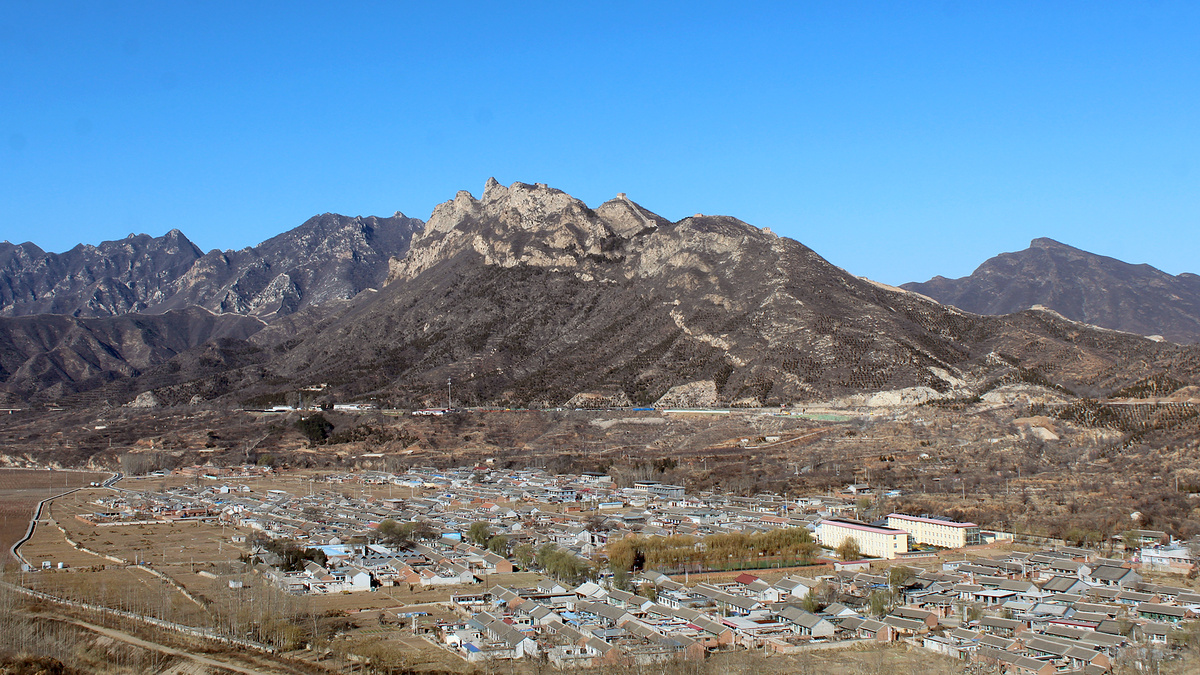
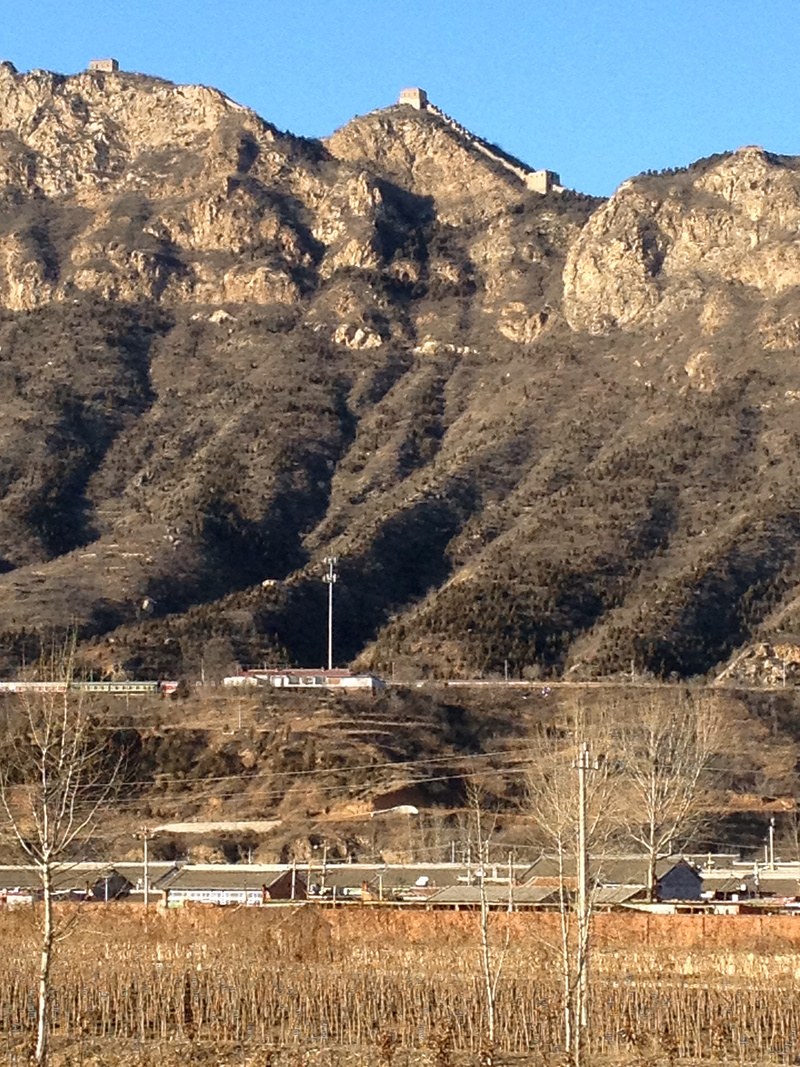
Great Wall towers atop tall cliffs, with a village below.
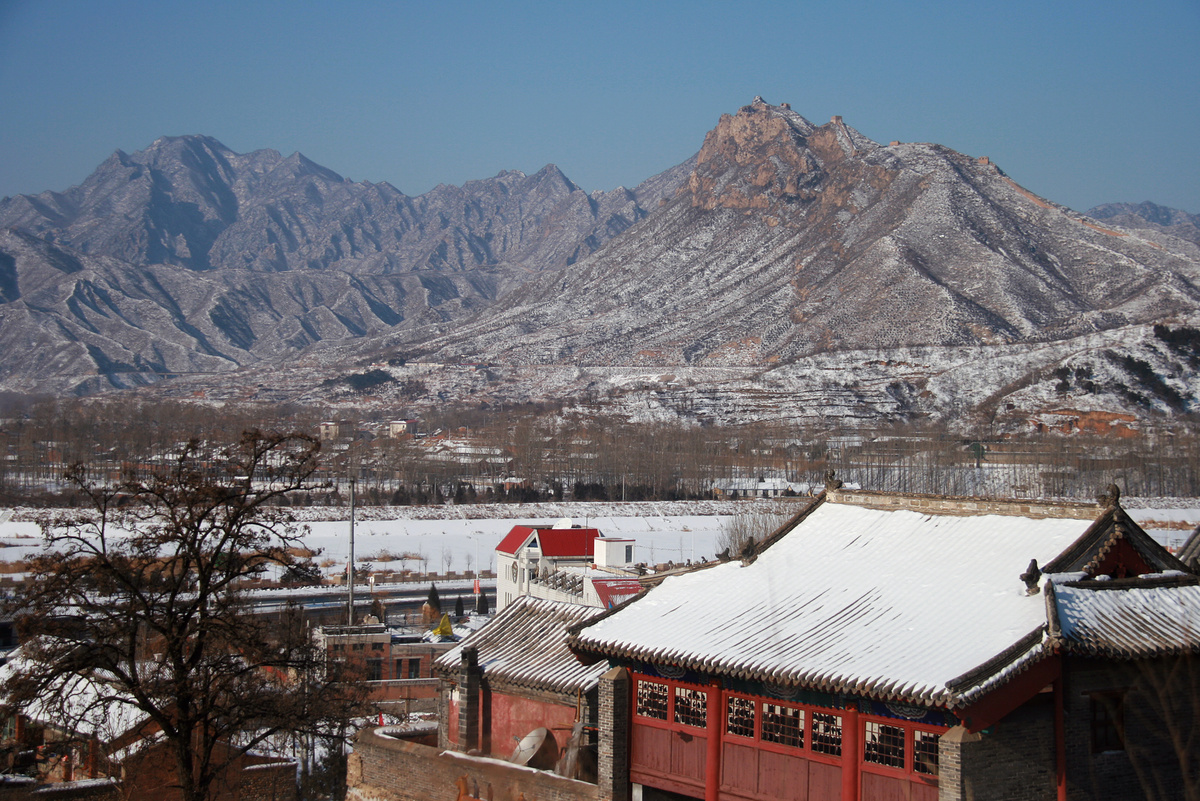
A view of the Wohushan ‘big ridge’ from the ‘Big Flower Tower’, on the other side of the river valley. (November 2017)

The Wohushan Great Wall is the western end of the Gubeikou Great Wall, the part on the west side of the Chao River. (On the east side of the river it’s the Panlongshan Great Wall.)

‘Wohushan’ translates as Crouching Tiger Mountain—same ‘Crouching Tiger’ as the movie ‘Crouching Tiger, Hidden Dragon’.

I’ve heard people claim that the Gubeikou Great Wall is the oldest Great Wall in Beijing. But most of what you see of the Great Wall at Gubeikou was finished during the later years of the Ming Dynasty (1368–1644 AD), especially the parts with the big towers and brick walls and battlements. The Ming Dynasty was the last of the dynasties to build and maintain the Great Wall, so those parts aren’t the oldest in Beijing. The claims of “oldest Great Wall in Beijing” probably refer to the two-metre-wide line of stones and rocks on one of the ridgelines of Wohushan, said to have been built during the Northern Qi Dynasty (550–577 AD), with the idea that the Ming wall was built over the top of the Northern Qi wall—except for this bit, which was left exposed when the Ming wall architects decided to take it in a different direction.

There are four main parts to the Wohushan Great Wall: the Sister Towers part; the Wohushan ‘big ridge’; the wall just behind the big ridge; and the wall above Chaoheguan Village. In Chaoheguan Village there are also remnants of walls from a Ming-era fort and a Gods of Plagues temple. The Gubeikou train station is also on the Wohushan side of the river.

The photos in this post are grouped into the four main parts I mentioned, with a bonus section covering Chaoheguan Village and some extra views. I’ve also included some public domain photos that were taken in the early- to mid-1900s.
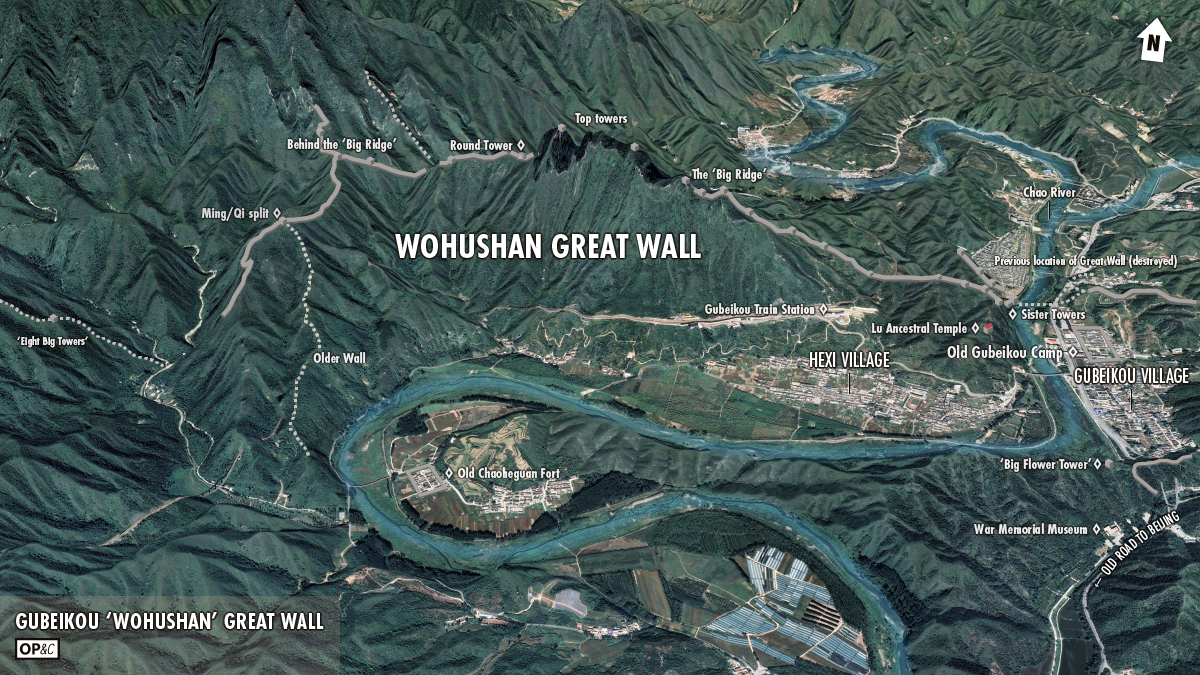
A map that shows an overall view of the the Gubeikou ‘Wohushan’ Great Wall in north-east Beijing.
The Gubeikou ‘Wohushan’ Great Wall is on the west side of the river at Gubeikou.

This is part of a series of three Gubeikou posts—the others being the one about the Panlongshan Great Wall, and one that covers the main general and historical info about the Gubeikou Great Wall, with photos from the village and the North Gate and loop of Great Wall around there. (I’ll link to the last one when it’s finished.)


Sister Towers area

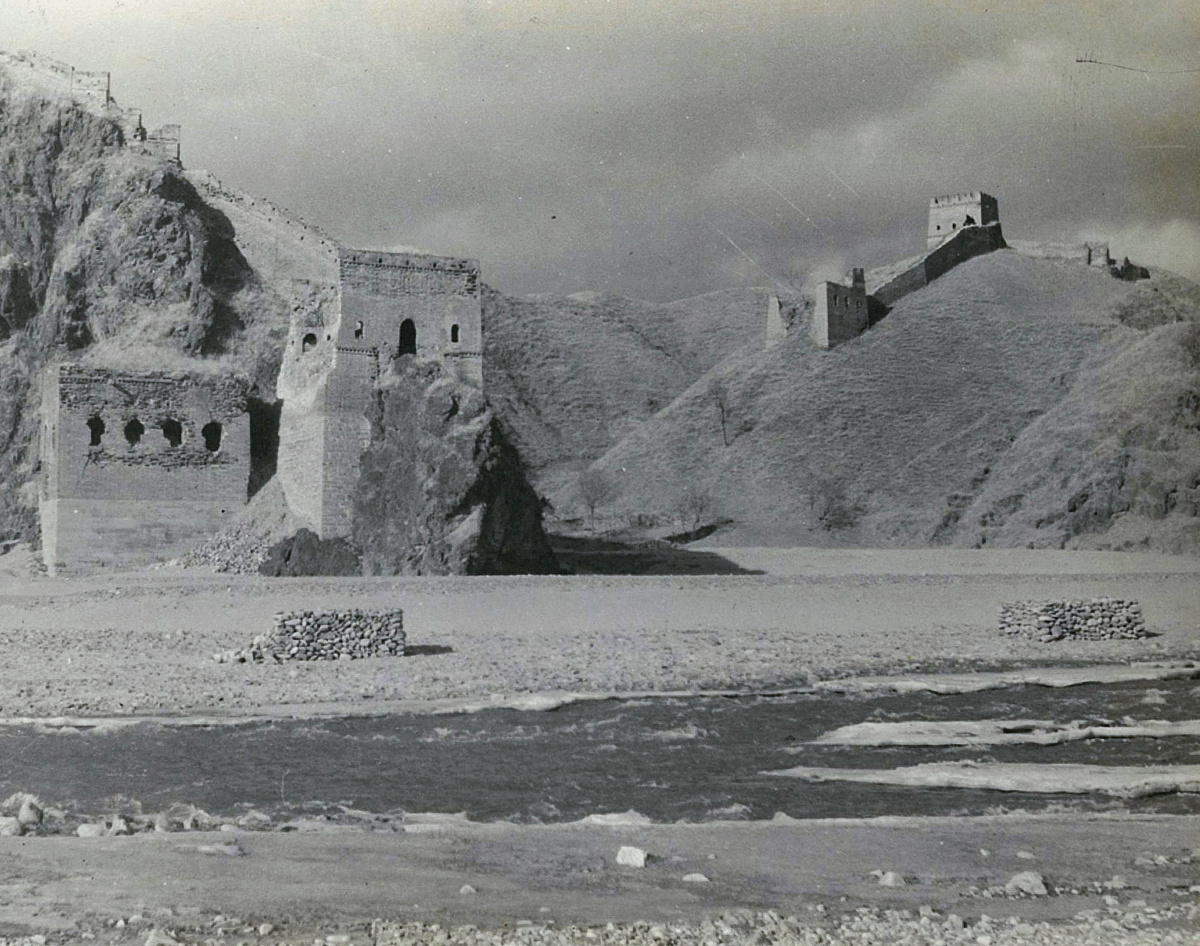
They’re called the Sister Towers because they’re built so close together. In Chinese it’s Jiěmèi Lóu (姐妹楼). Jiě (姐) means ‘older sister’, Mèi (妹) means ‘younger sister’, and I suppose that would make the larger tower the Big Sister. I haven’t actually visited these two towers, or the wall nearby. I have seen the Sisters from the wall above. A proper visit is on the to-do list, especially as there’s also a rare three-level tower on a nearby hill.
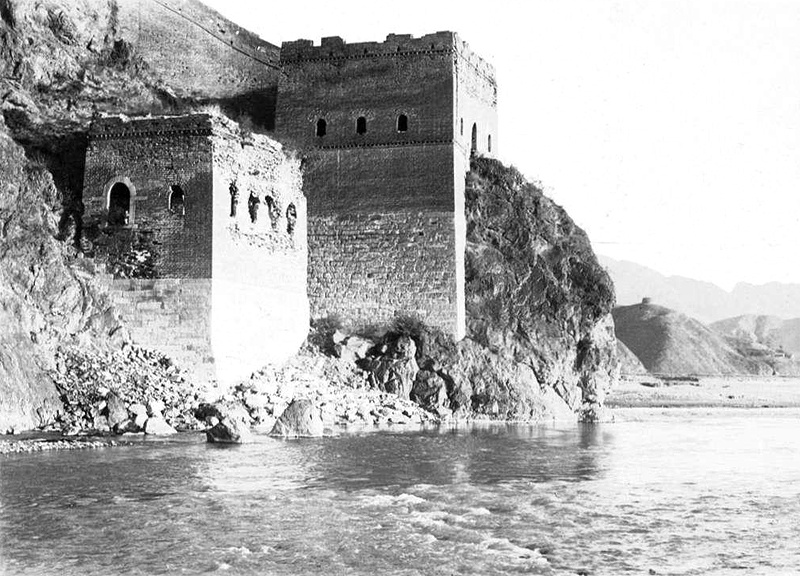
Historical photo of the Sister Towers at Gubeikou.
Historical photo of the Sister Towers at Gubeikou. (Early 1900s? Public Domain via Picryl)
Historical photo of the Sister Towers at Gubeikou
January 1940 photo of the Sister Towers. (North China Transportation Archives)
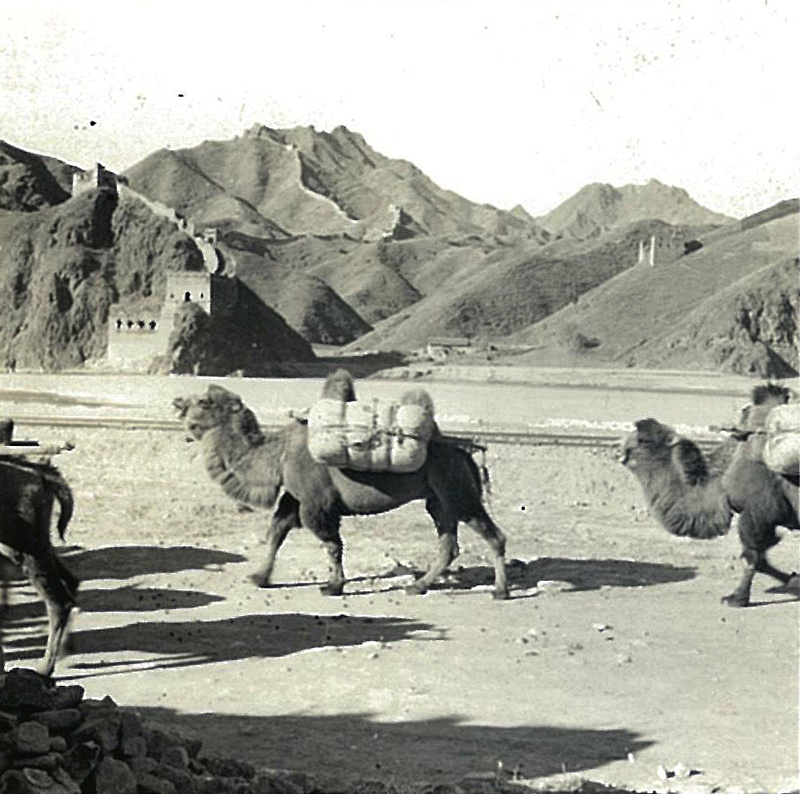
Historical photo of the Sister Towers at Gubeikou
Loaded camels passing the Sister Towers, heading in the direction of Beijing. (November 1938, North China Transportation Archives)
Rough line of unrepaired Great Wall at Gubeikou
The rough line of Great Wall between the Sister Towers and the Wohushan big ridge. (January 2017)
Rough line of unrepaired Great Wall at Gubeikou
Walls of a temple
The back side of Lu Ancestral Temple (吕祠庙), on the Beijing side of the wall.

The next two photos were taken from the Wohushan ‘big ridge’ and show the wall above the Sister Towers, the main fortifications on the other side of the river, and a little bit of Gubeikou Village and the Panlongshan Great Wall.
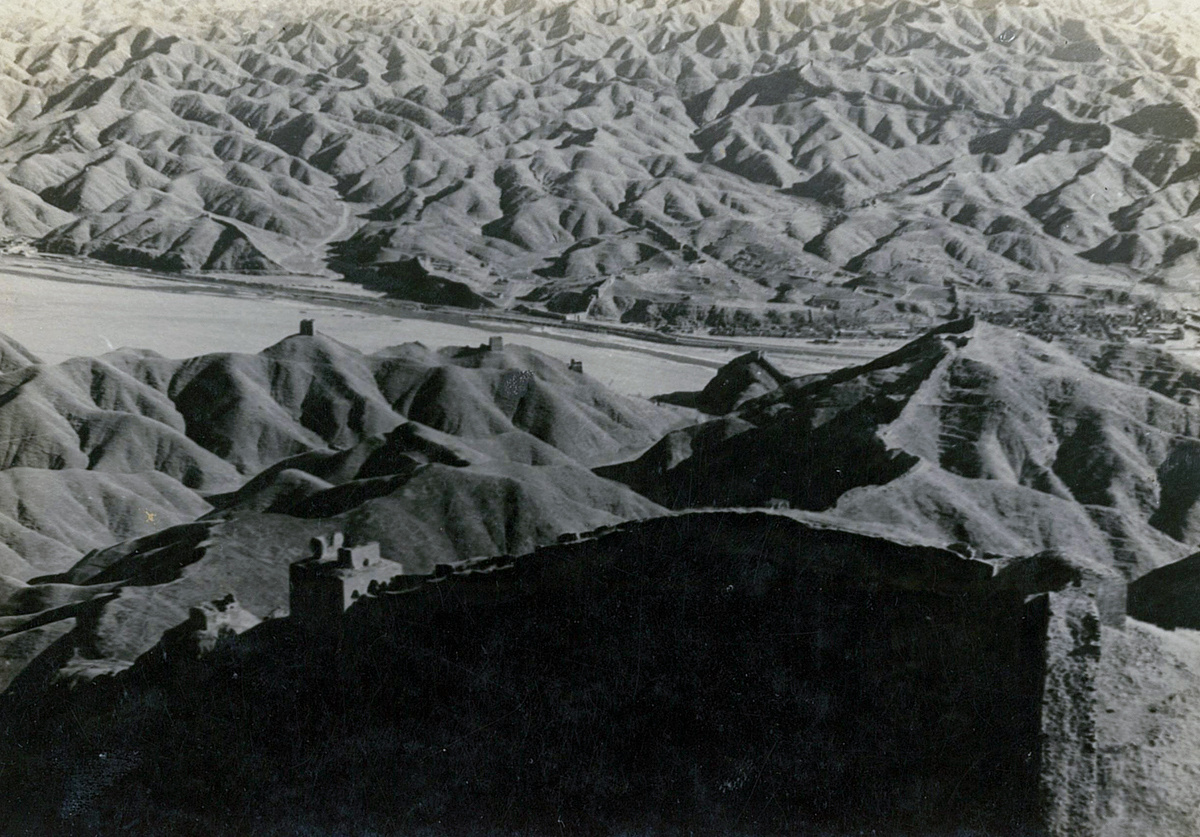
Historical photo of the wall above Gubeikou’s Sister Towers. (Source North China Transportation Archives)
The lower section of the Wohushan ‘big ridge’, with parts of the Panlongshan Great Wall seen on the other side of the river. (January 1940, North China Transportation Archives)
Historical photo of the towers above Gubeikou’s Sister Towers. (Source North China Transportation Archives)
January 1940. (North China Transportation Archives)

The Wohushan ‘big ridge’ and top towers

This is the main part of the Great Wall at Wohushan, and I’ve never hiked it. Also on the to-do list. The shape of the big ridge is probably what inspired the ‘Crouching Tiger’ name of the mountain.
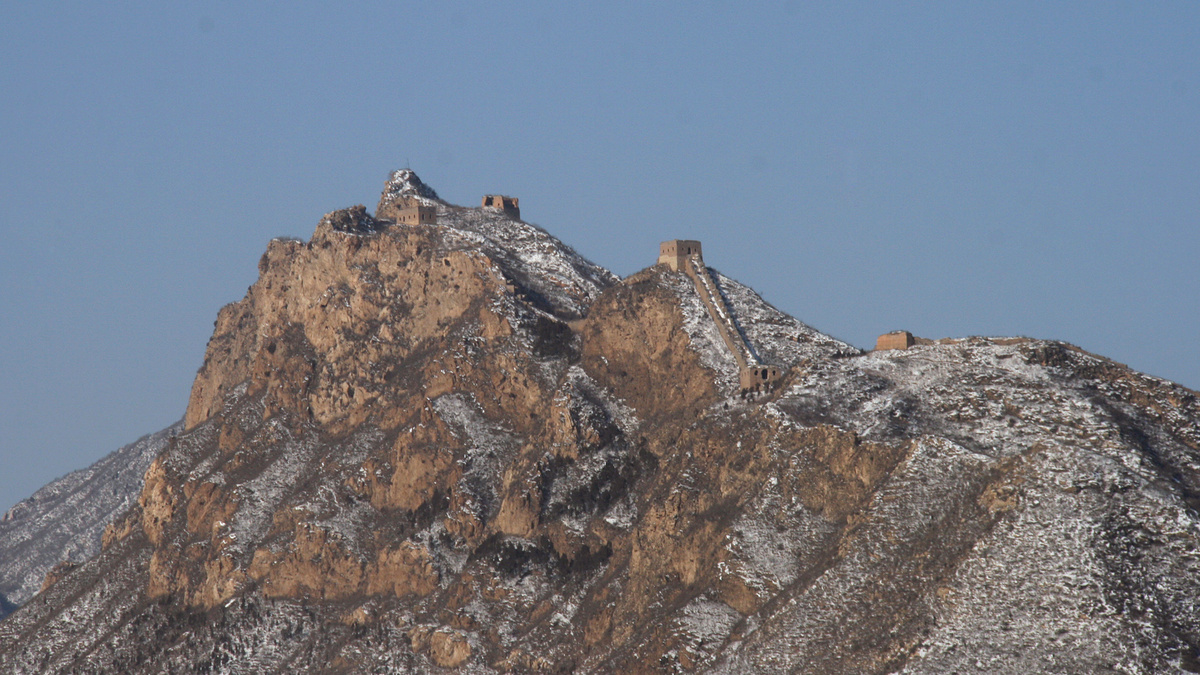
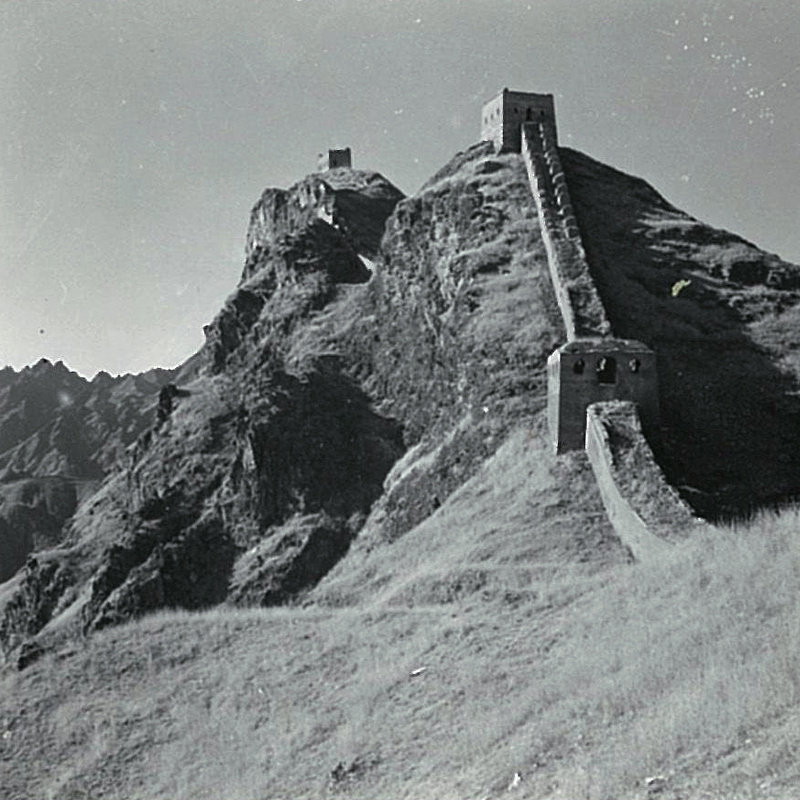
Great Wall towers atop tall cliffs.
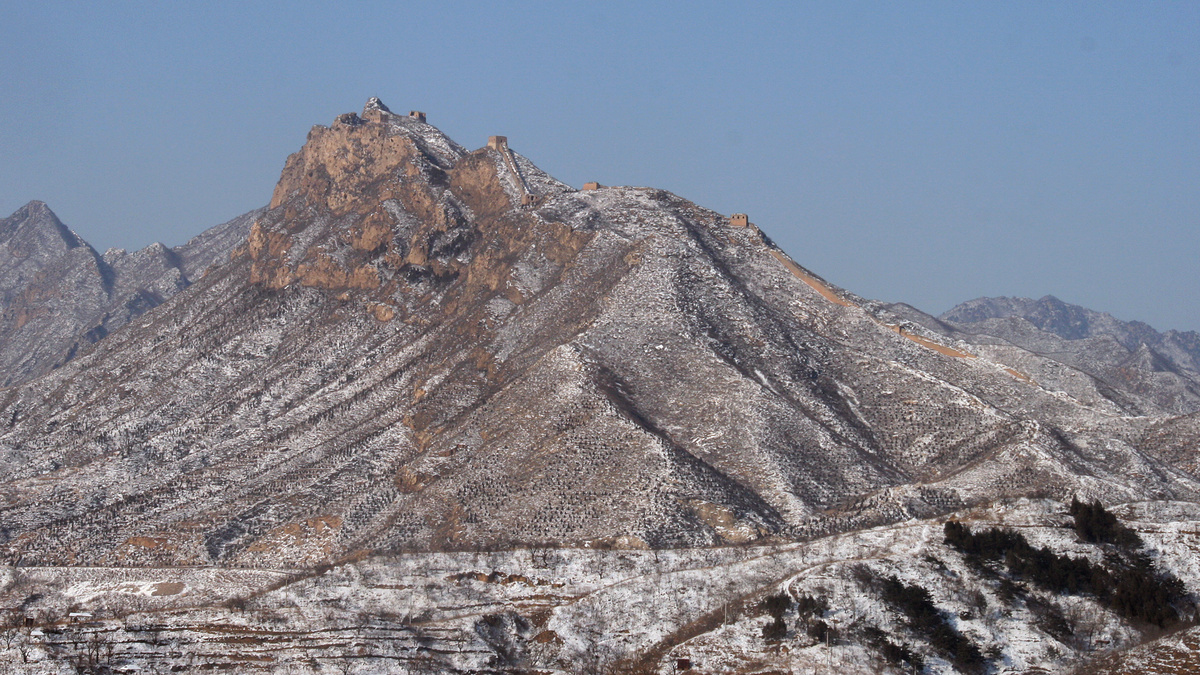
The top towers of the Wohushan big ridge. (Shot from the North Gate on the other side of the river, January 2010.)
Historical photo of towers on the Wohushan ‘big rise’.
A historical shot of those same towers on the Wohushan ‘big ridge’. (Possibly January 1940, North China Transportation Archives)
Great Wall towers atop tall cliffs.
Looks a bit like a crouching tiger? (2010)
The Wohushan big ridge, with the train lines below.
A shot of the ridge and top towers from near the old train station. (January 2017)
Great Wall towers atop tall cliffs
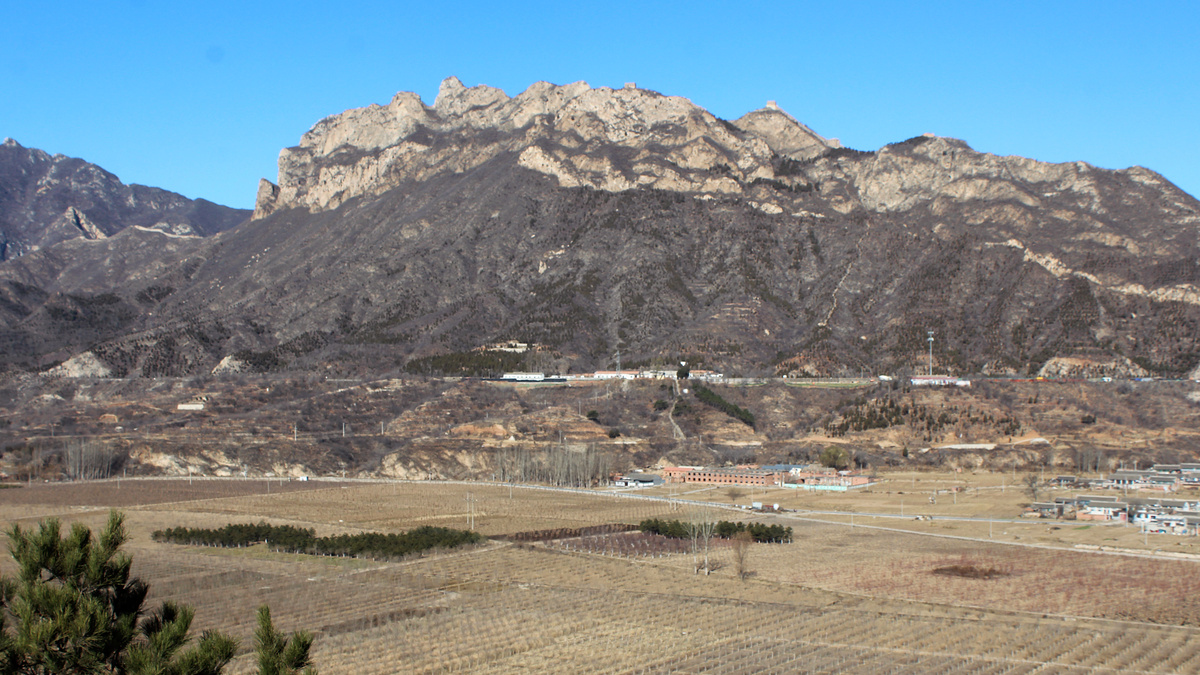
A view of the Wohushan big ridge from the opposite side of the river valley. (November 2017)
Great Wall towers atop tall cliffs, the old Gubeikou railway station below
A shot of the top towers from down by the riverside. (January 2017, iPhone 4S)

Great Wall behind the big ridge

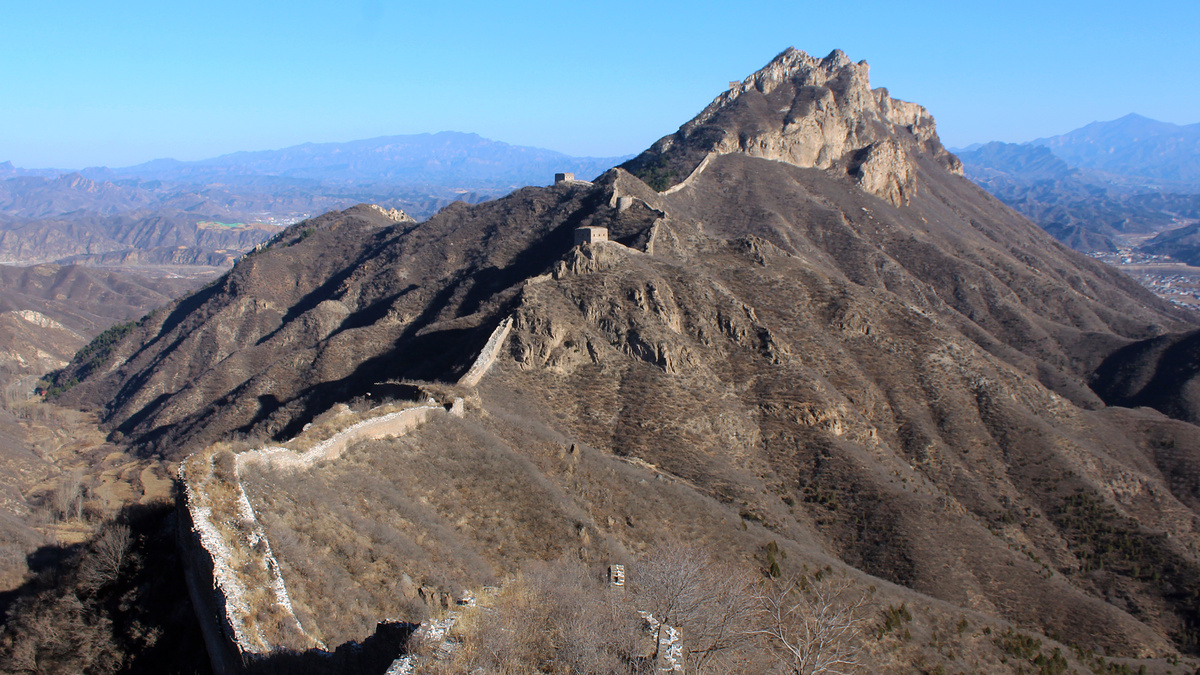
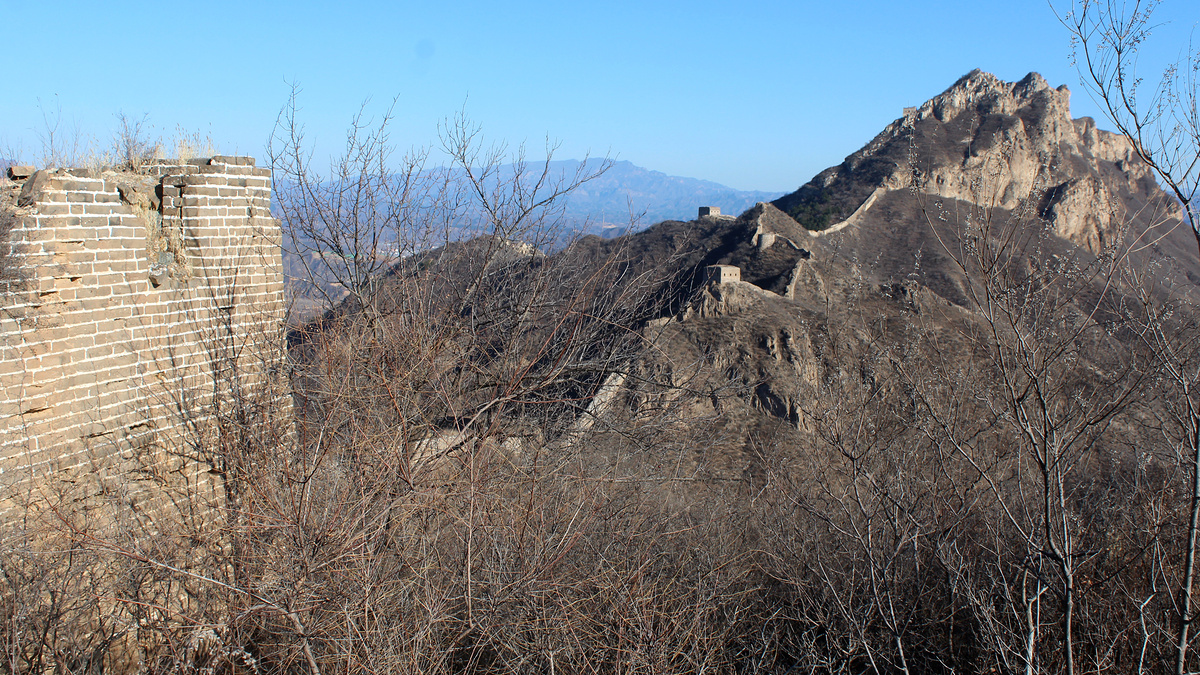
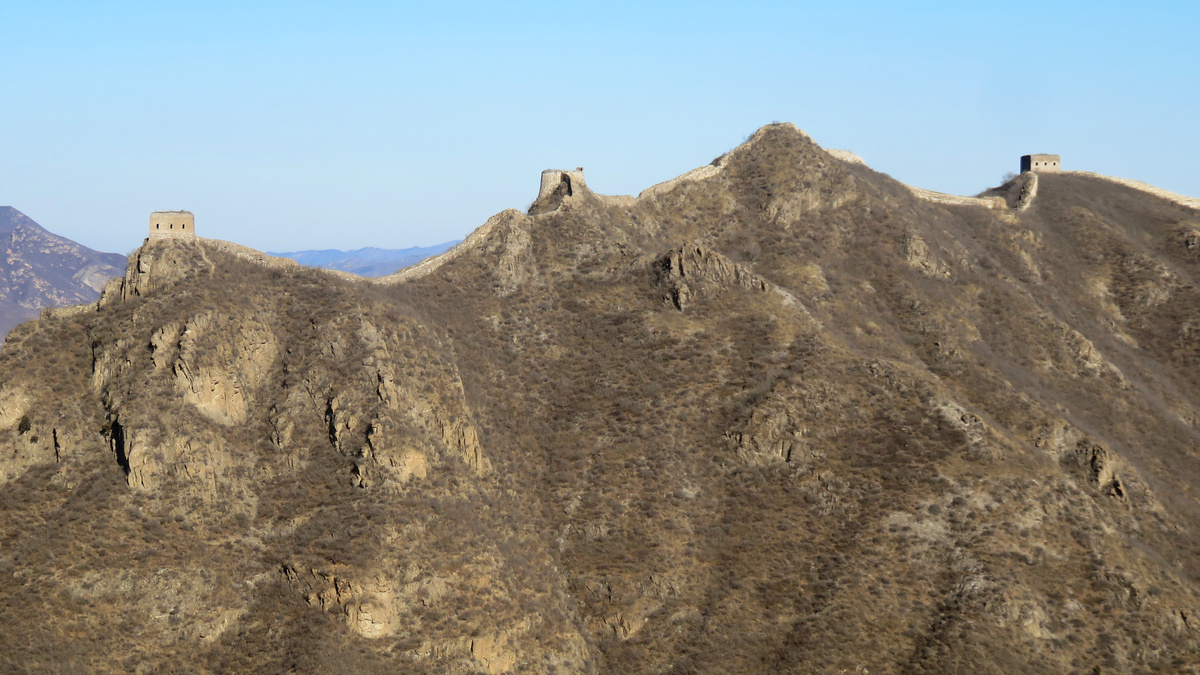
I’ve hiked the lower section of this part of the Wohushan Great Wall. I haven’t been on the upper section with the round tower.
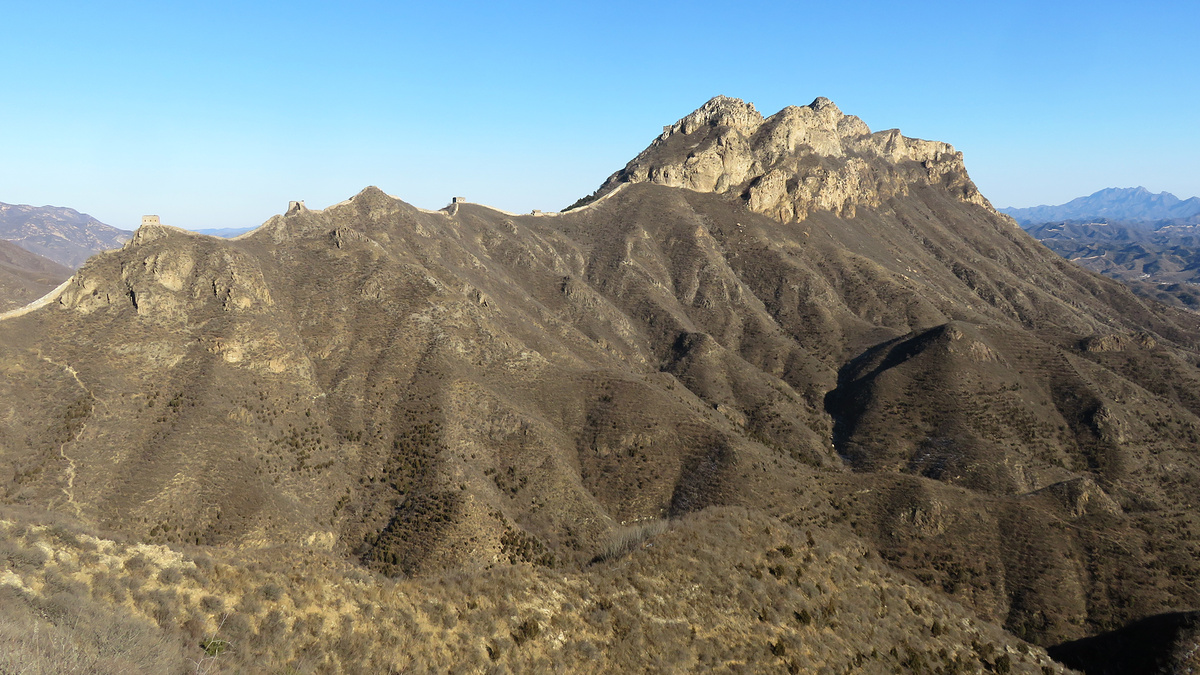
Great Wall at Wohushan, Gubeikou
The flatter line of Great Wall behind the big ridge at Wohushan. (January 2017)
Great Wall at Wohushan, Gubeikou
A shot of the round tower on the back side of the big ridge. (January 2017)
Great Wall at Wohushan, Gubeikou
(November 2017)
Great Wall at Wohushan, Gubeikou
(November 2016)
Great Wall at Wohushan, Gubeikou
(2017)
Great Wall at Wohushan, Gubeikou
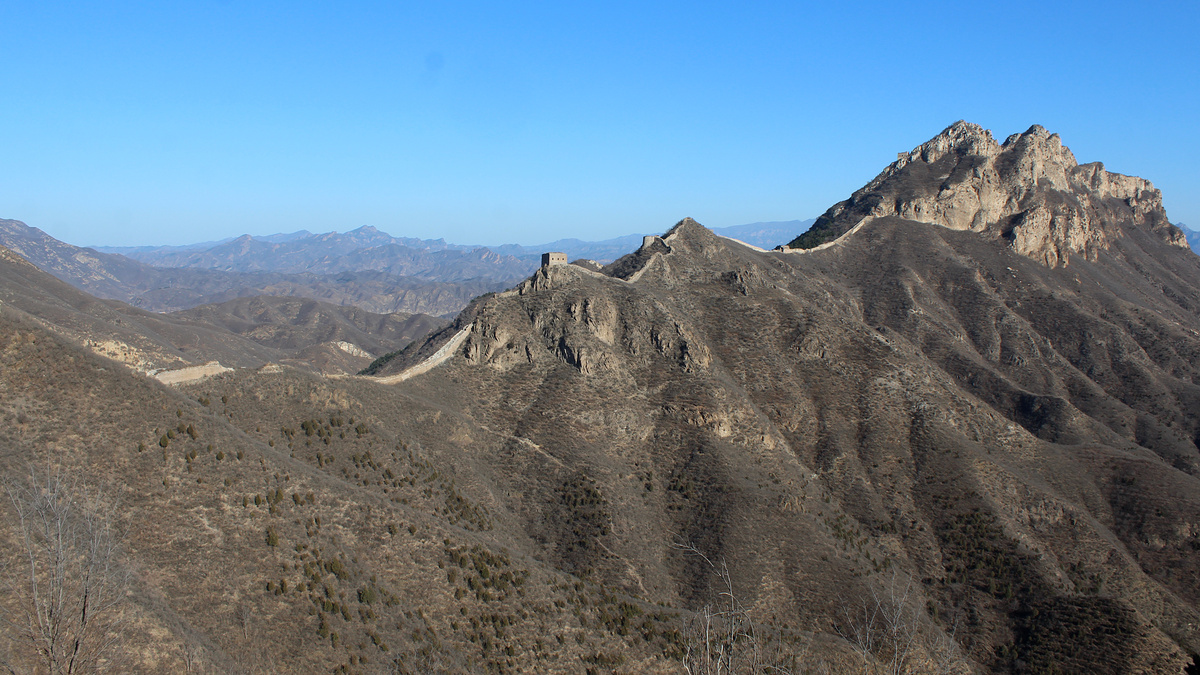
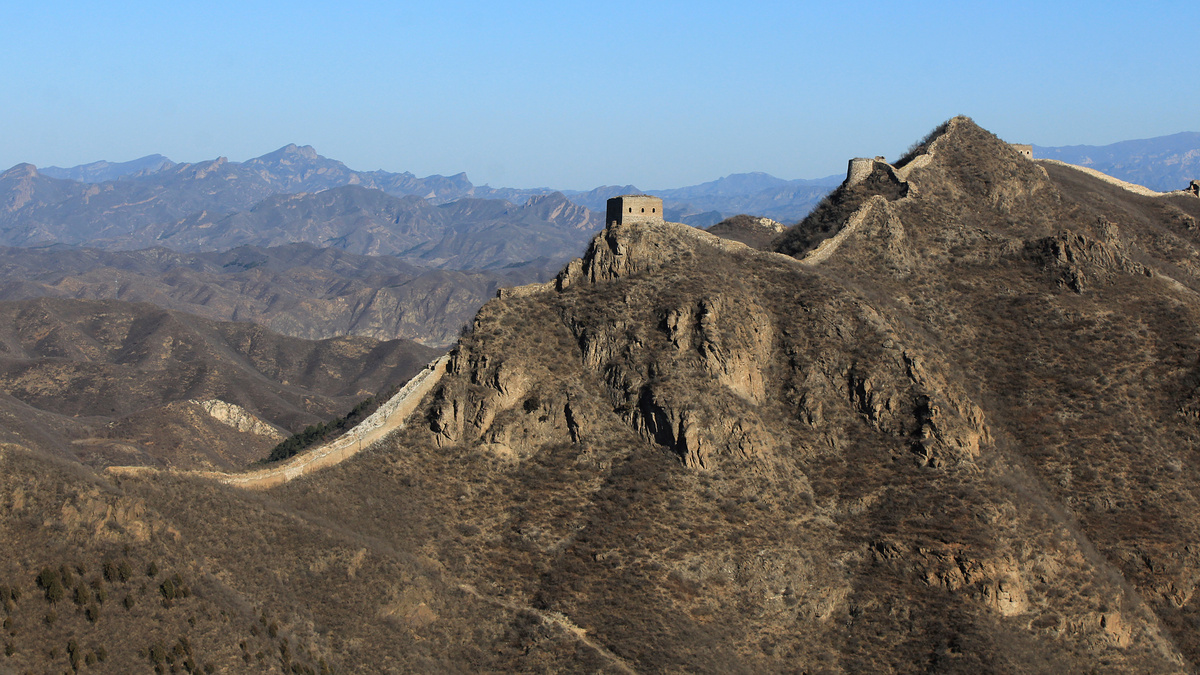
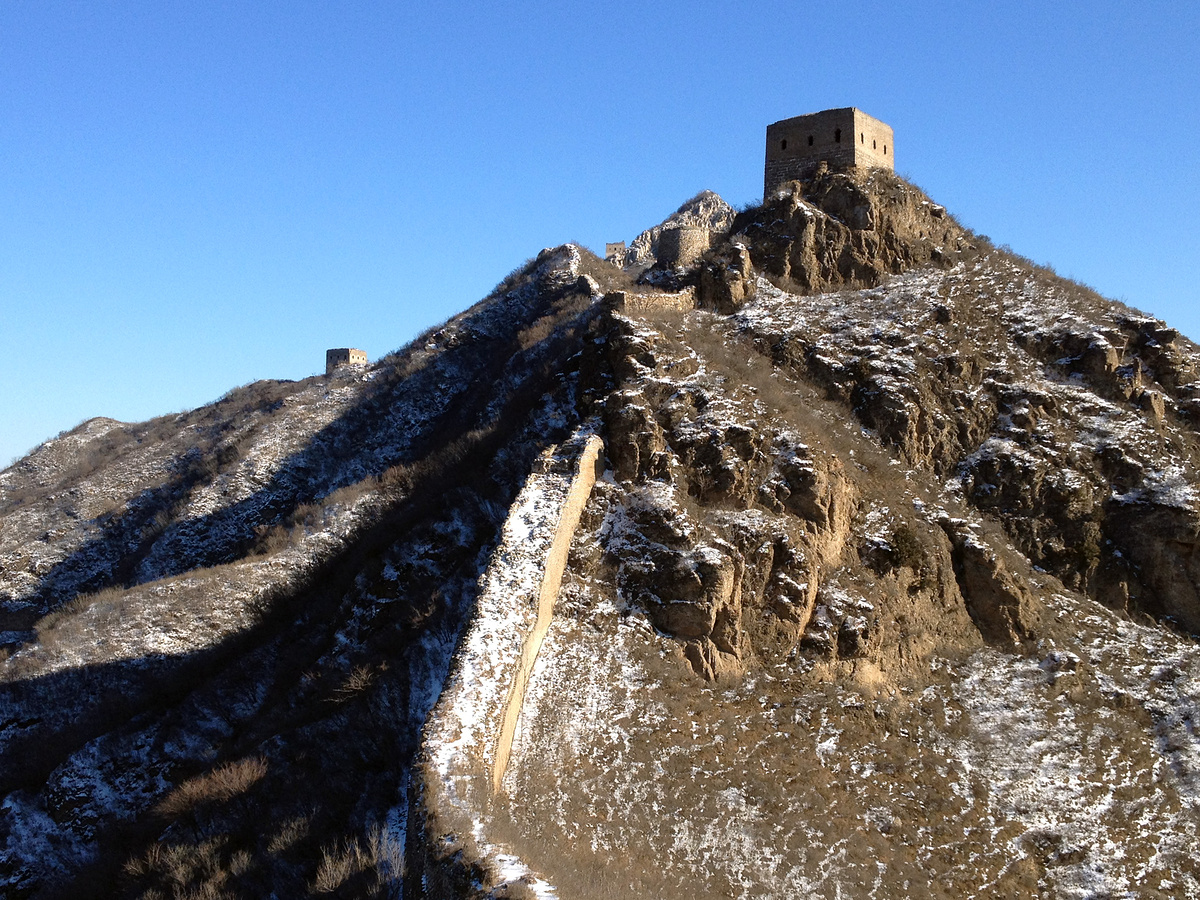
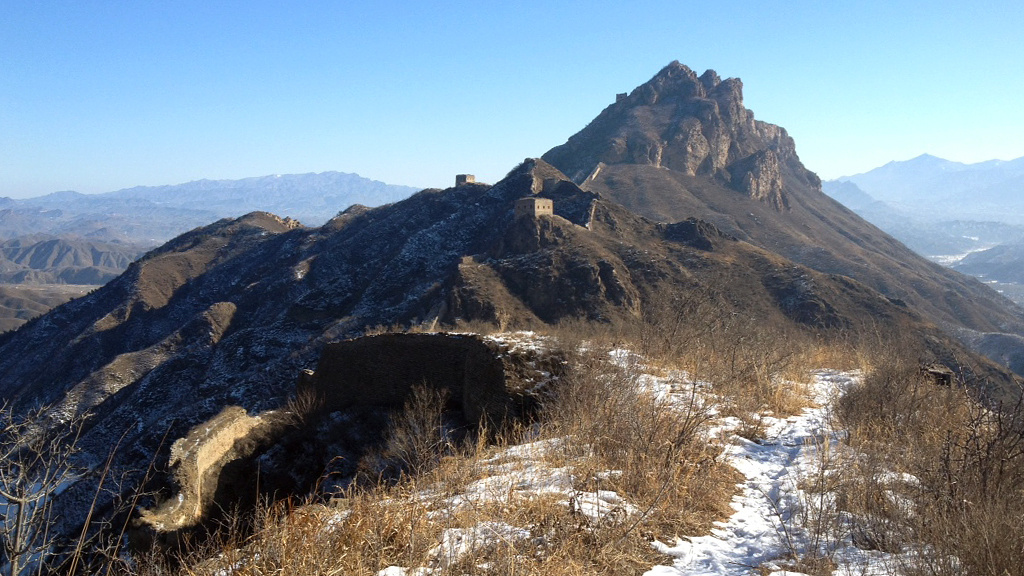
Great Wall towers on a ridge
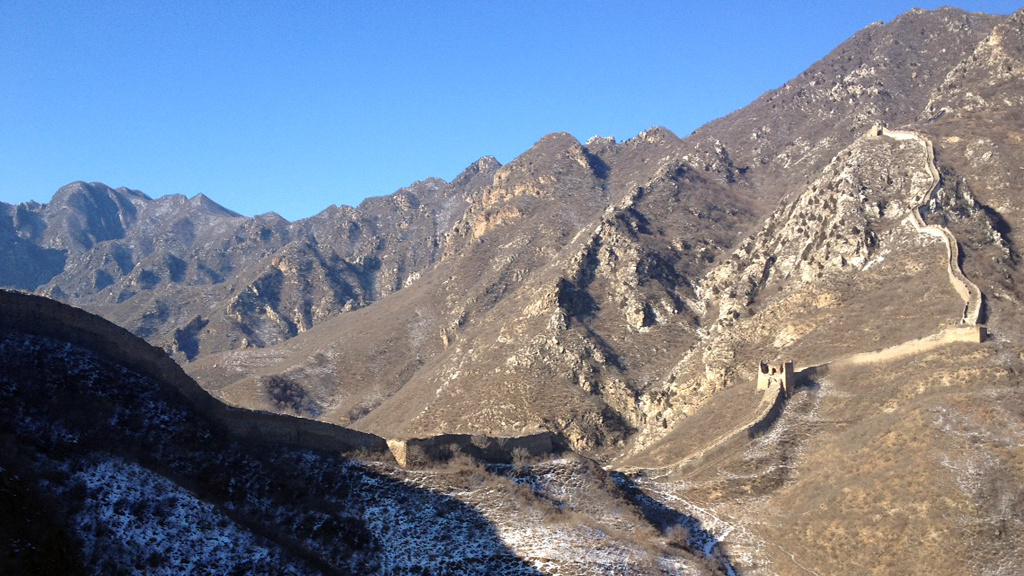
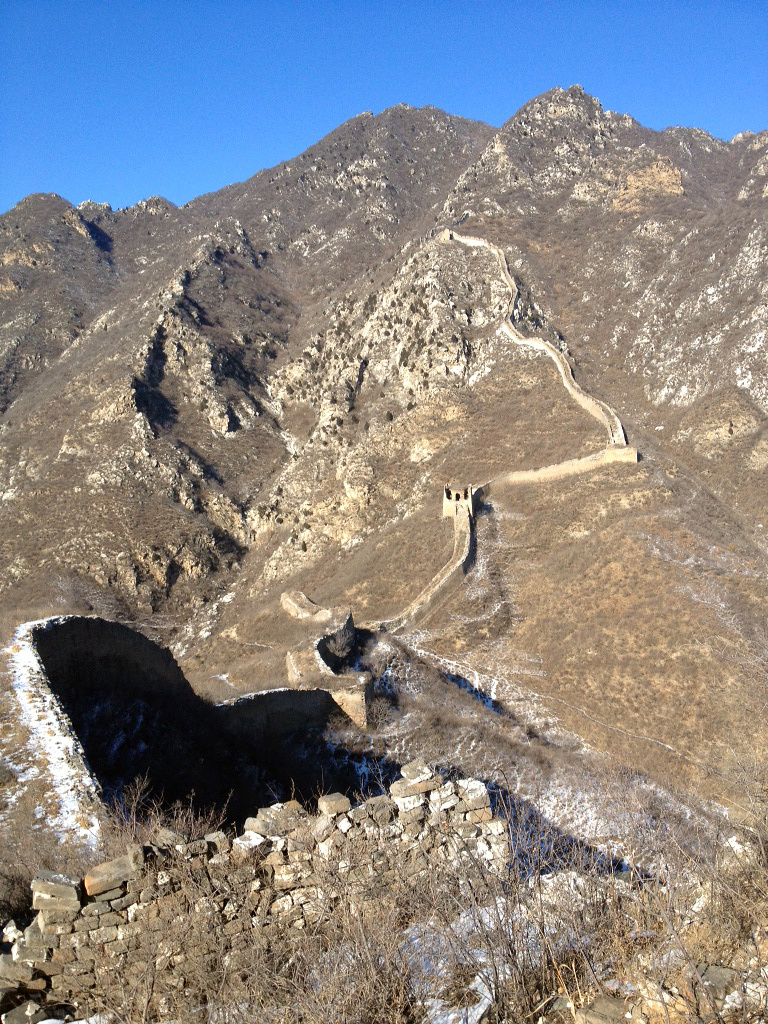
The towers on the back side of the big ridge. (January 2013, iPhone 4S)
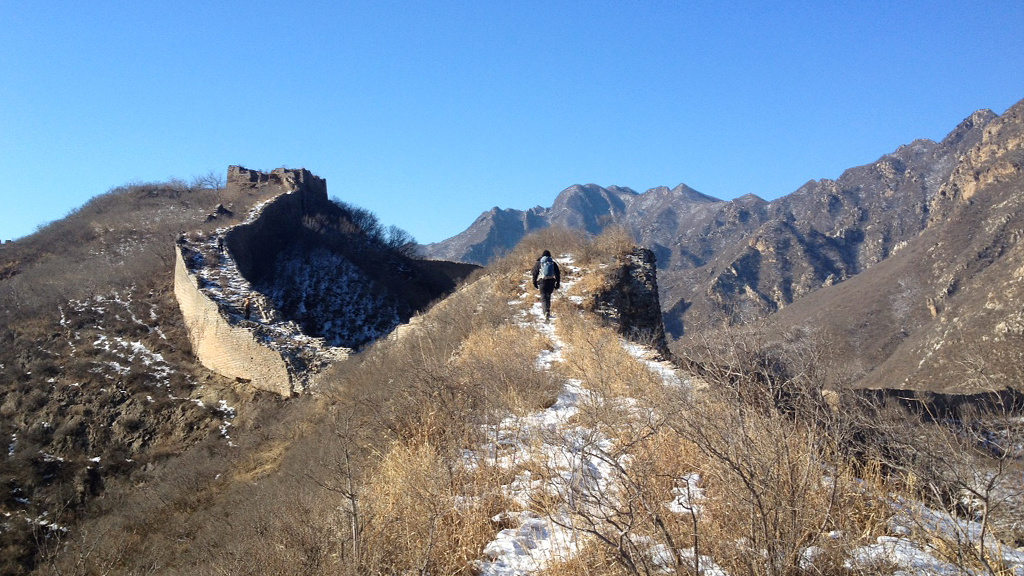
Hikers on the Great Wall in winter
Great Wall at Wohushan, Gubeikou
(2017)
Great Wall at Wohushan, Gubeikou
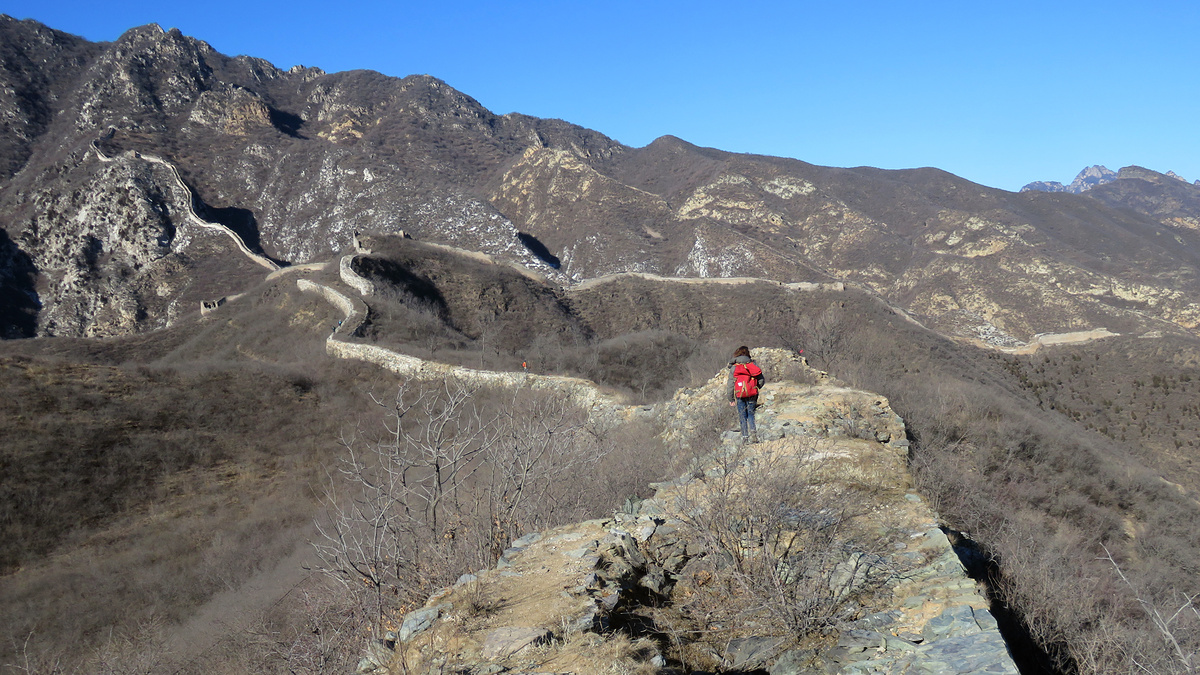
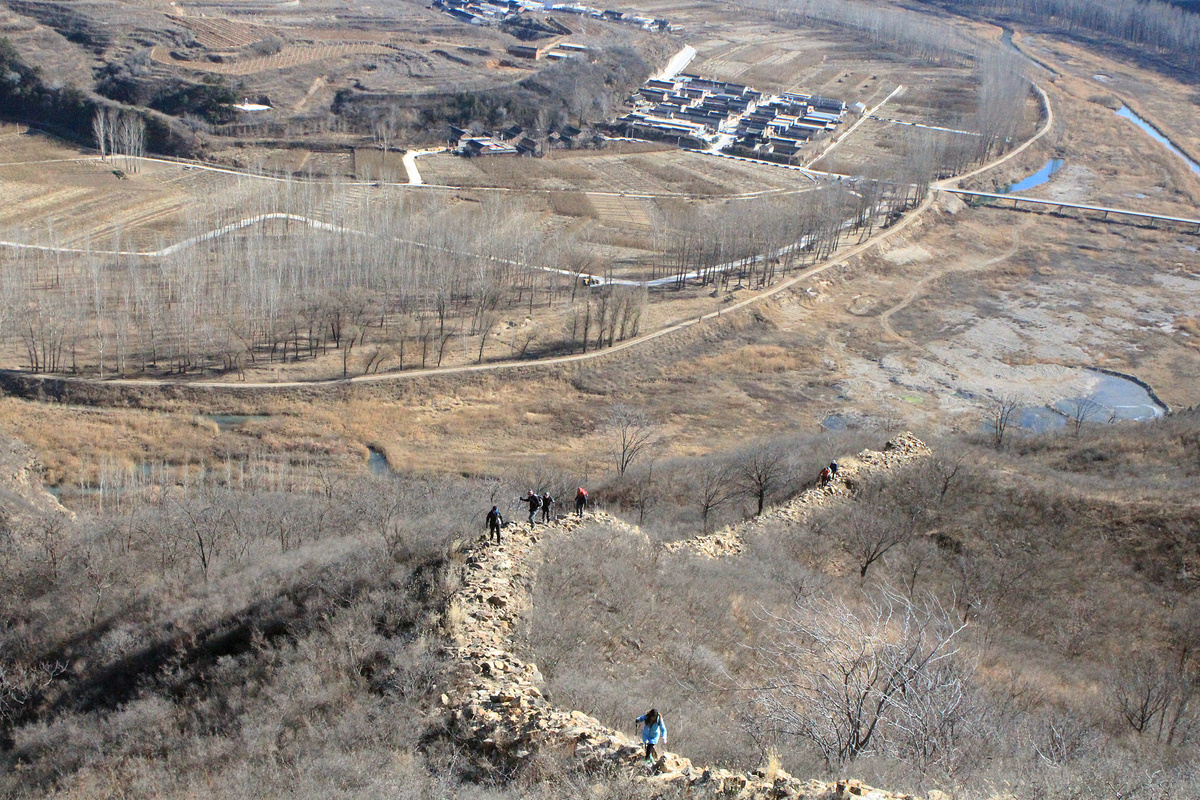
A spur section of wall blocks a dip between taller mountains. (2013)
Great Wall at Wohushan, Gubeikou
The spur section ends below taller cliffs. (Climbing up to the top of the spur is on the to-do list.)
Great Wall at Wohushan, Gubeikou
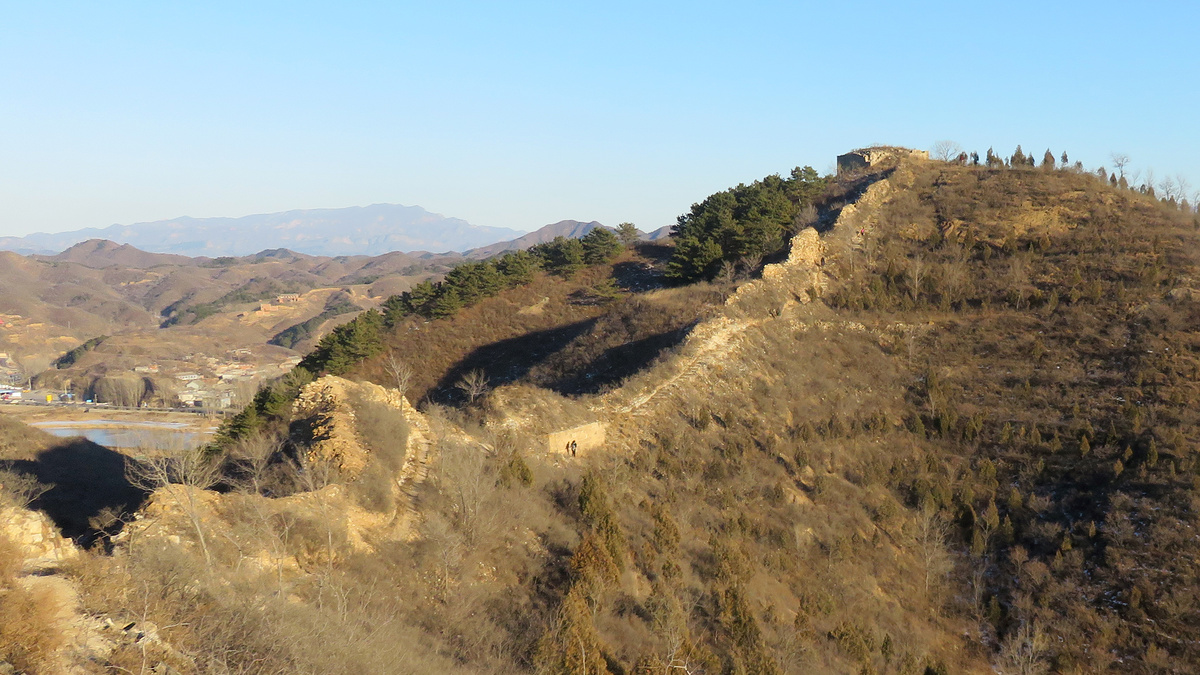
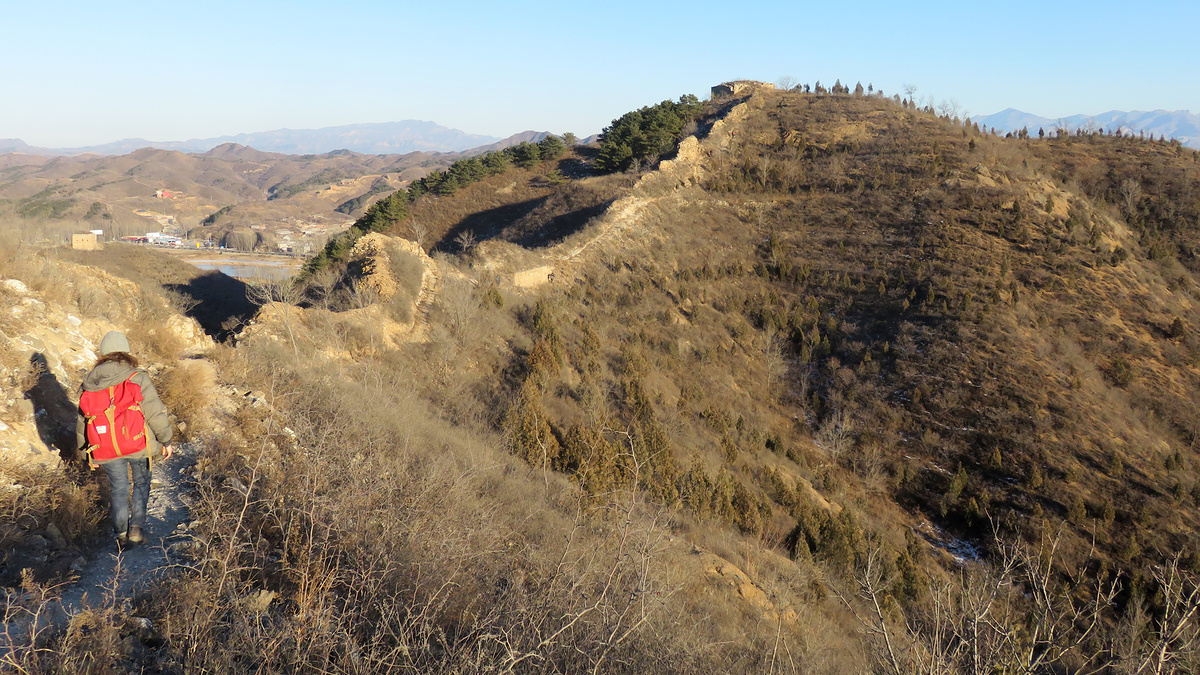
Hiking back towards the wall above Chaoheguan Village.
Great Wall at Wohushan, Gubeikou
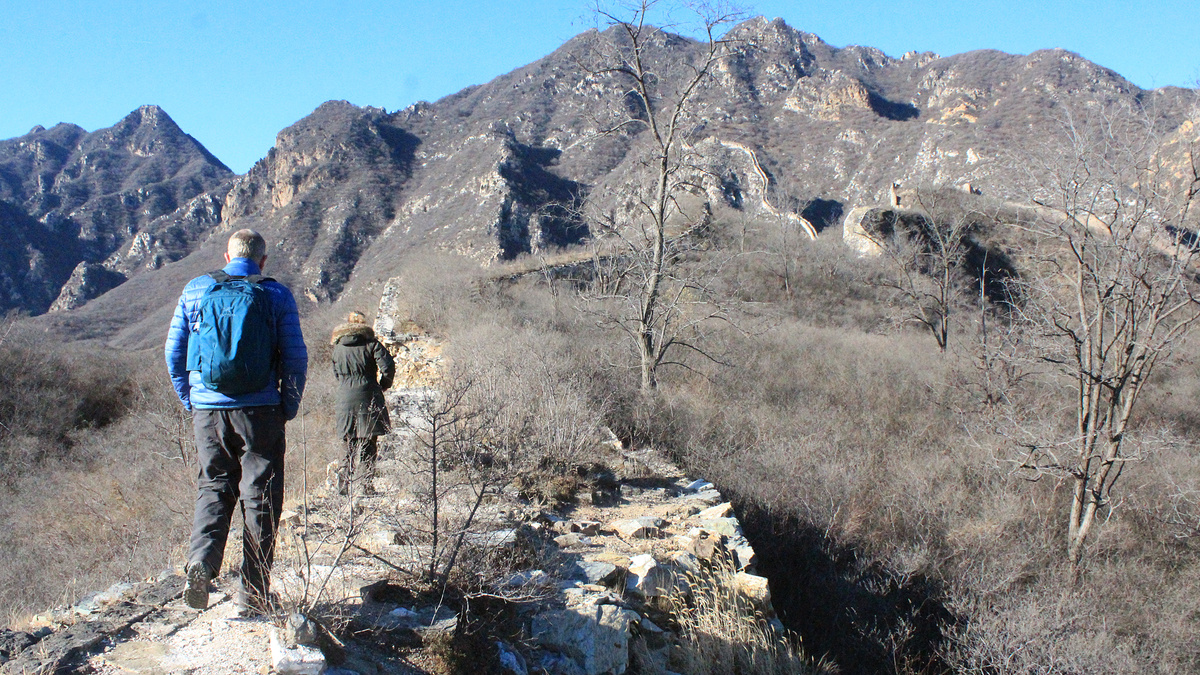
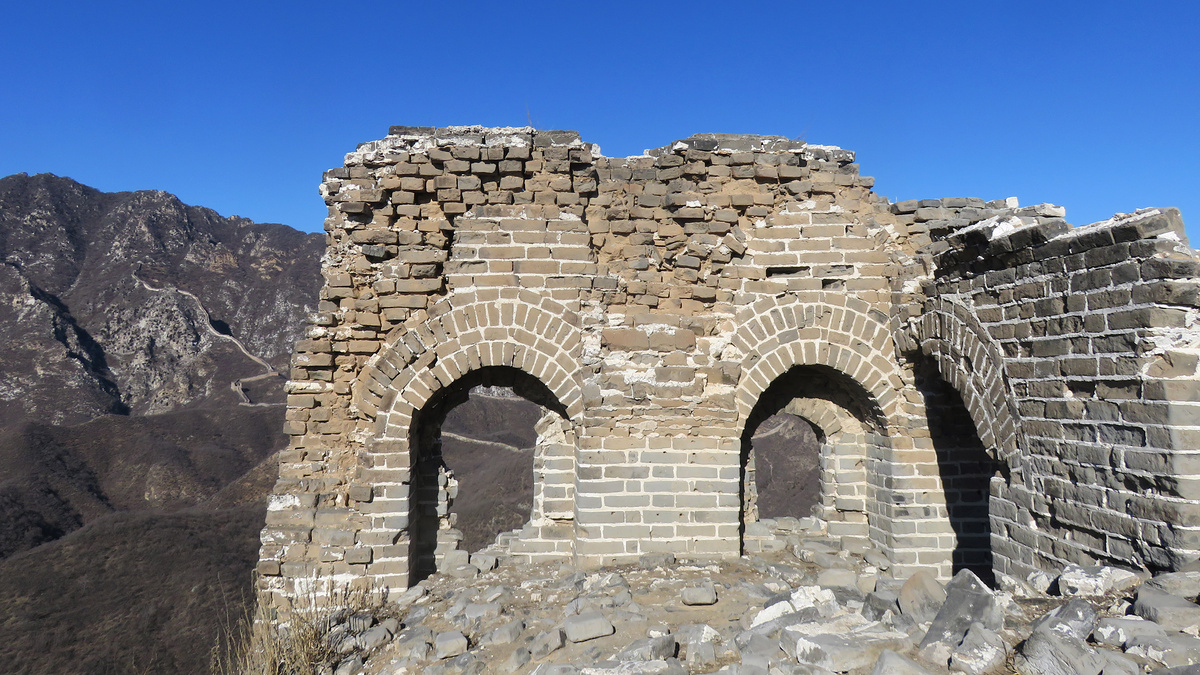
Part of a collapsed tower. This tower is where the Ming Dynasty Great Wall splits from the Northern Qi Great Wall. (January 2017)
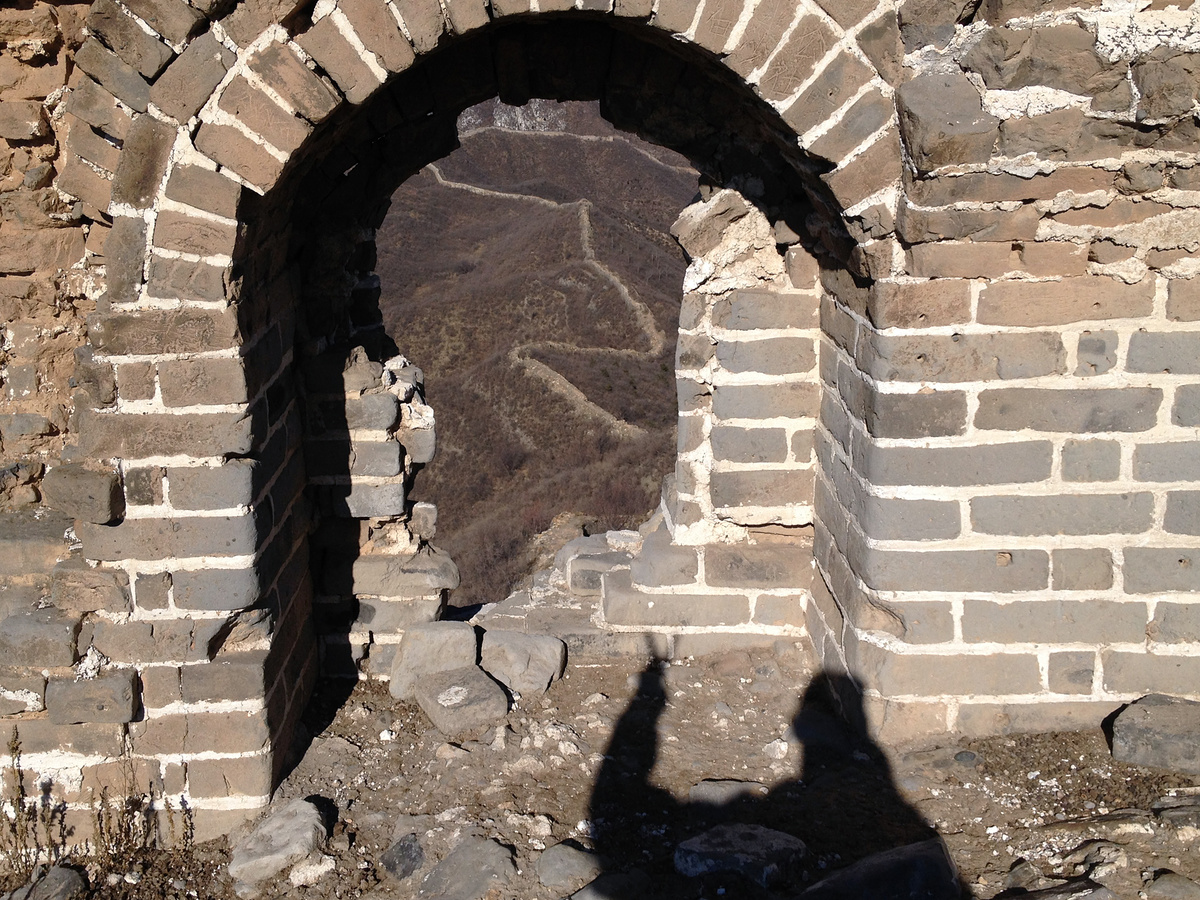
Great Wall at Wohushan, Gubeikou - a broken tower.
The outside of the collapsed tower.
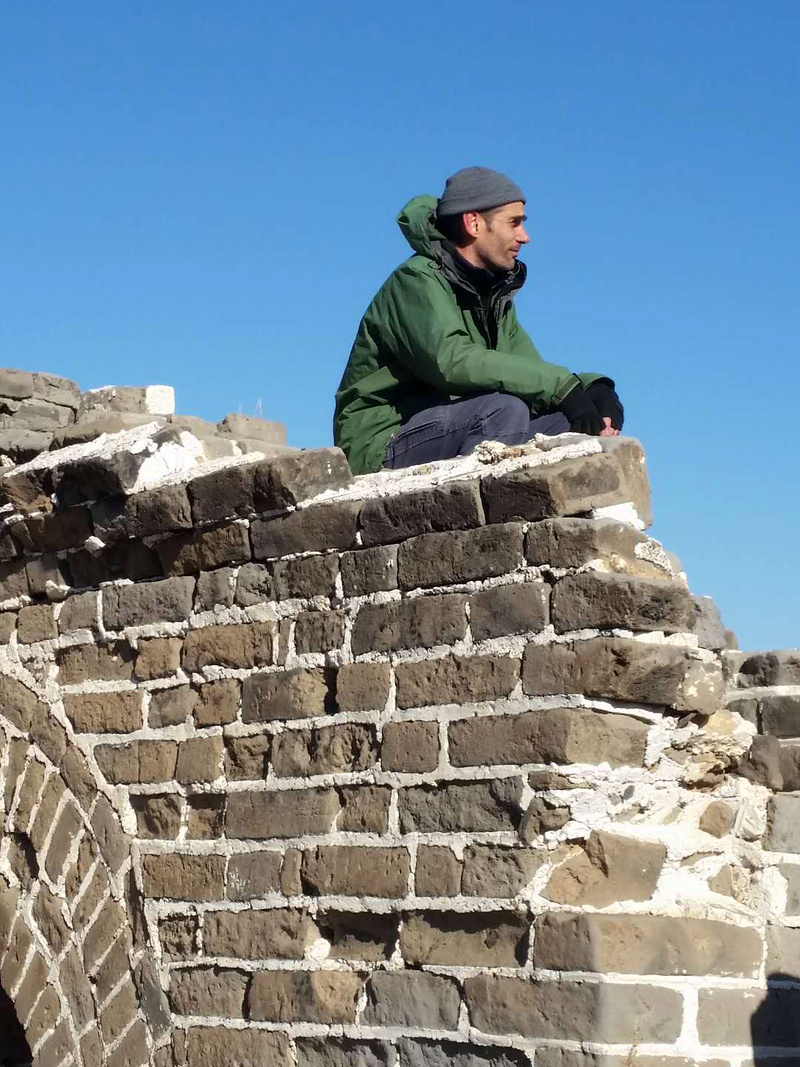
Person on top of the Great Wall
The author perched on the collapsed tower. (Photo credit Richie Rich.)
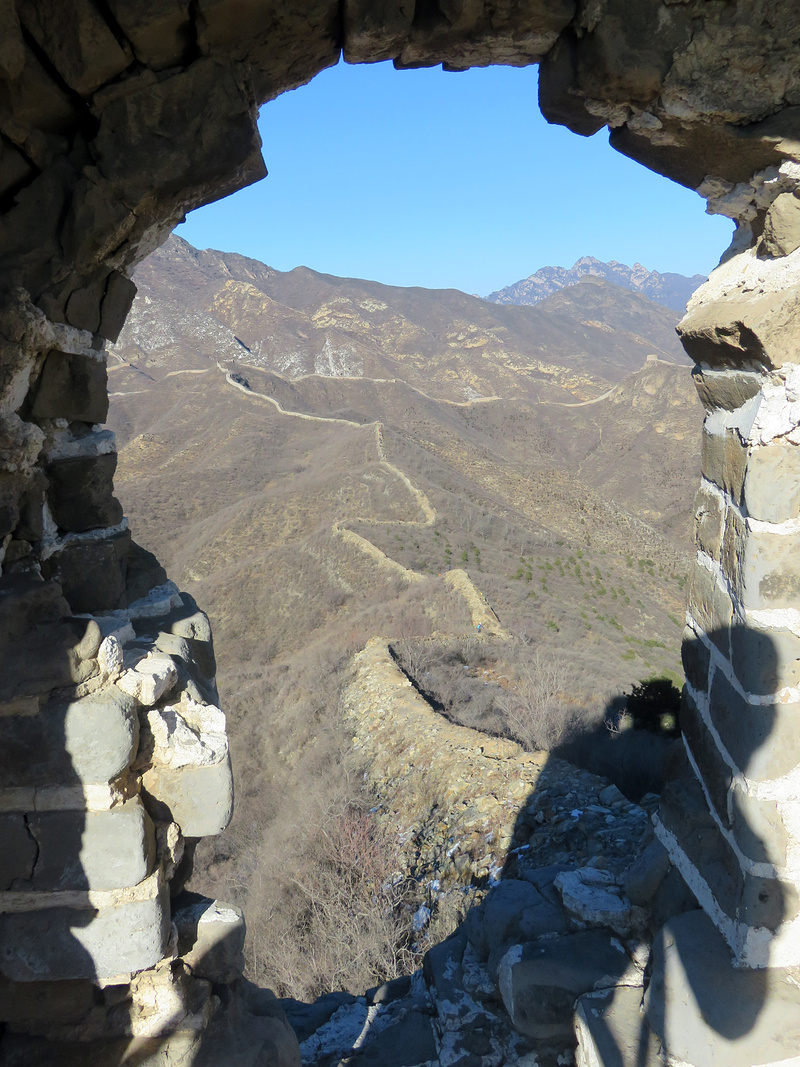
Great Wall at Wohushan, Gubeikou

Great Wall above Chaoheguan Village

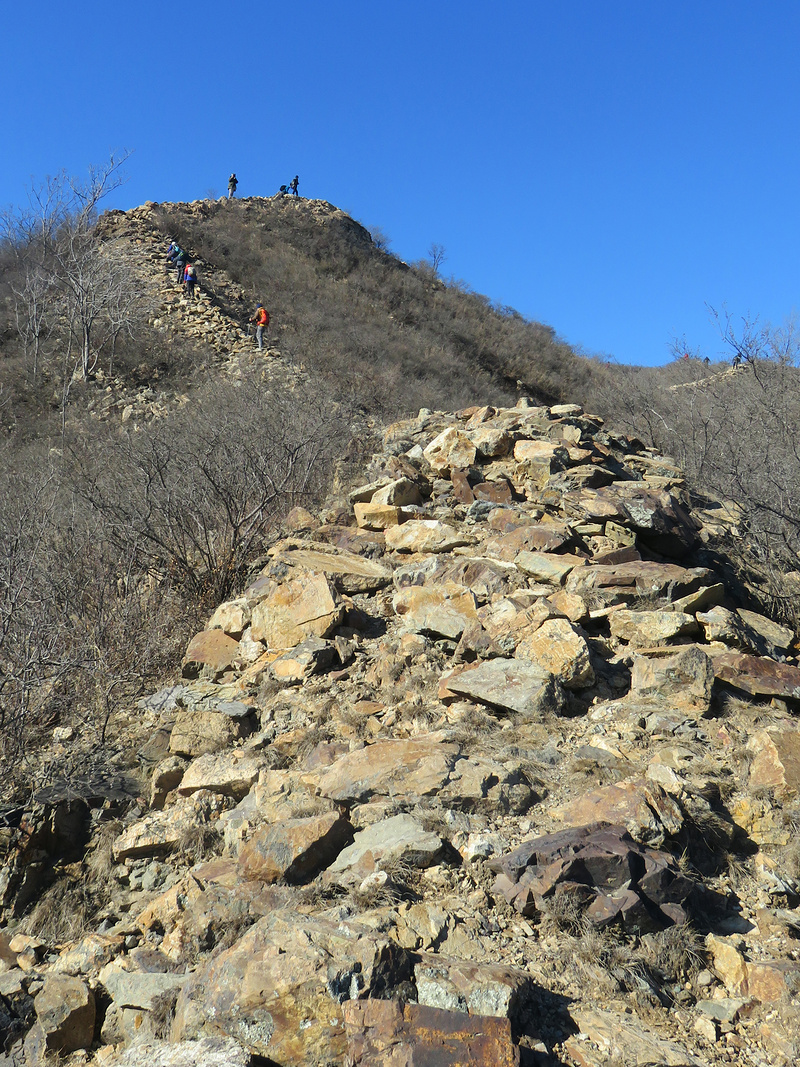
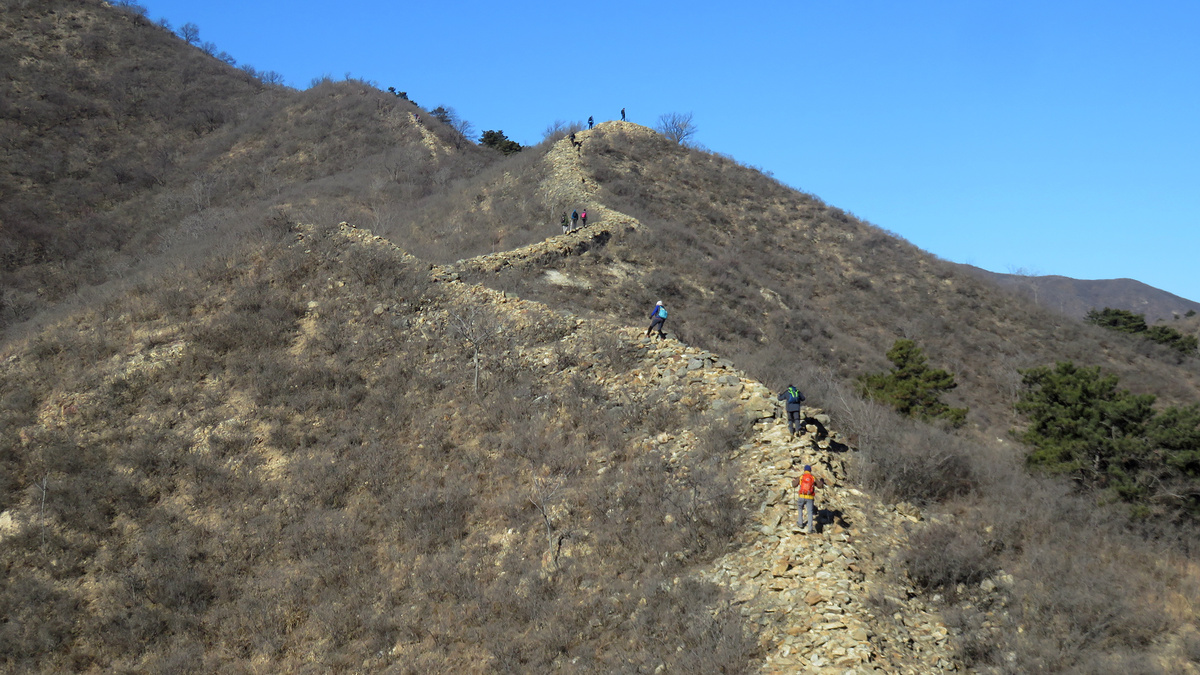
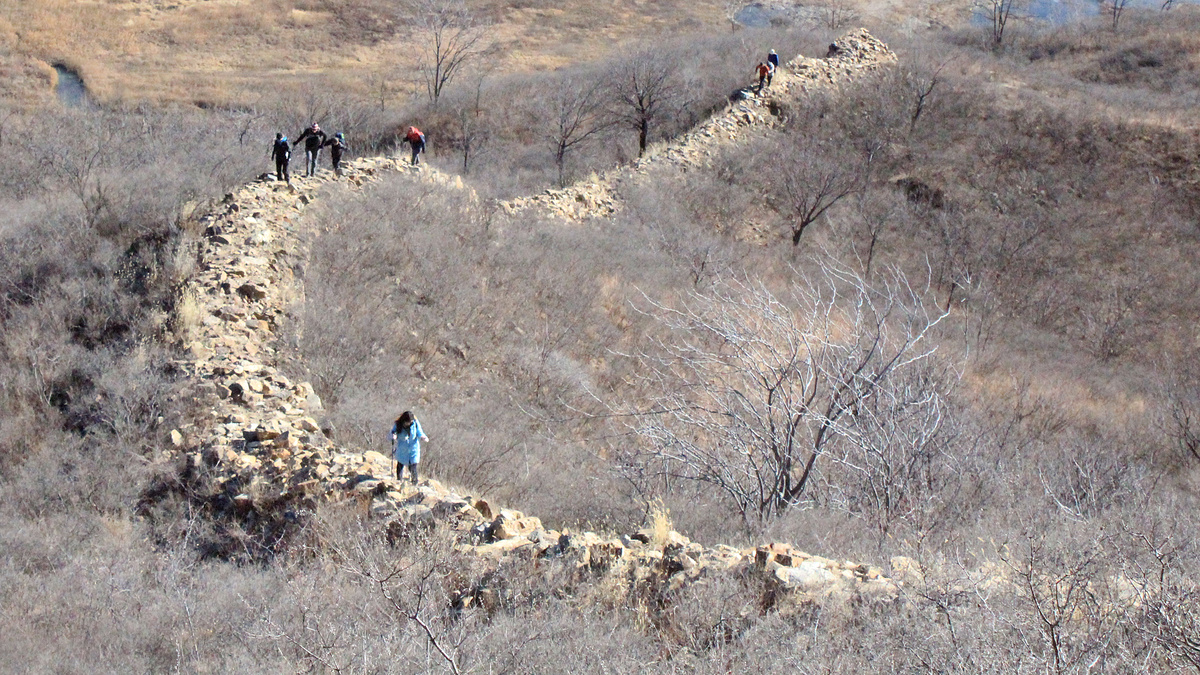
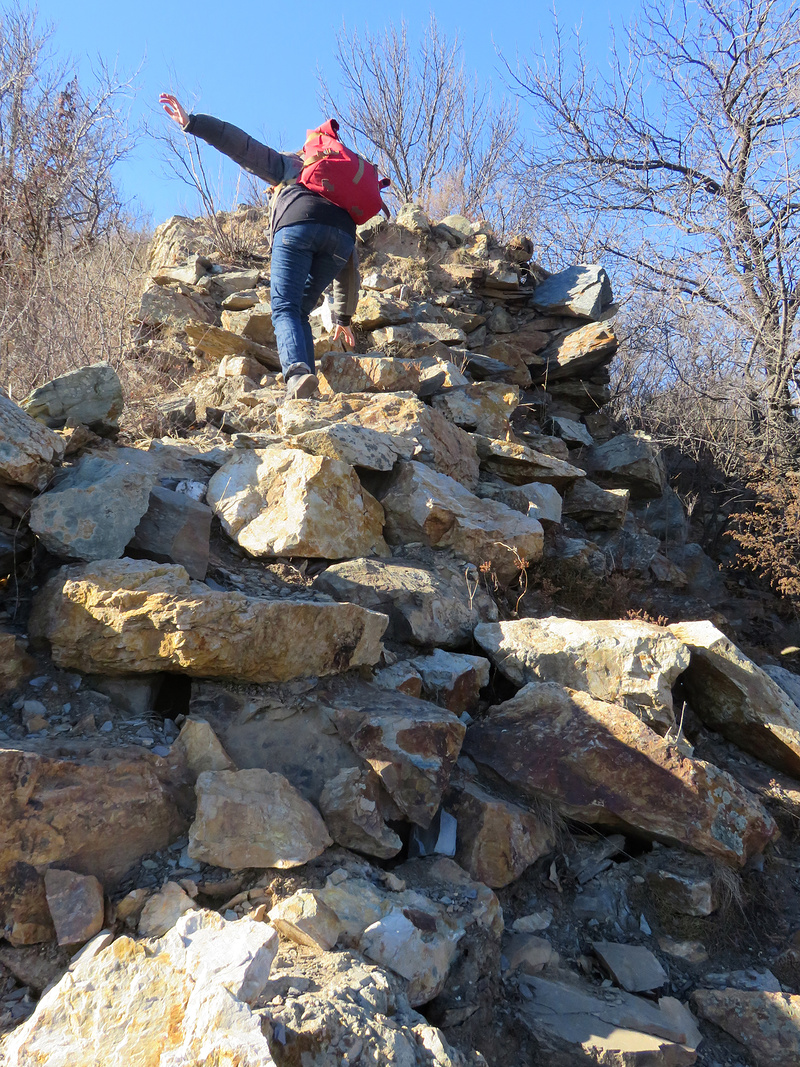
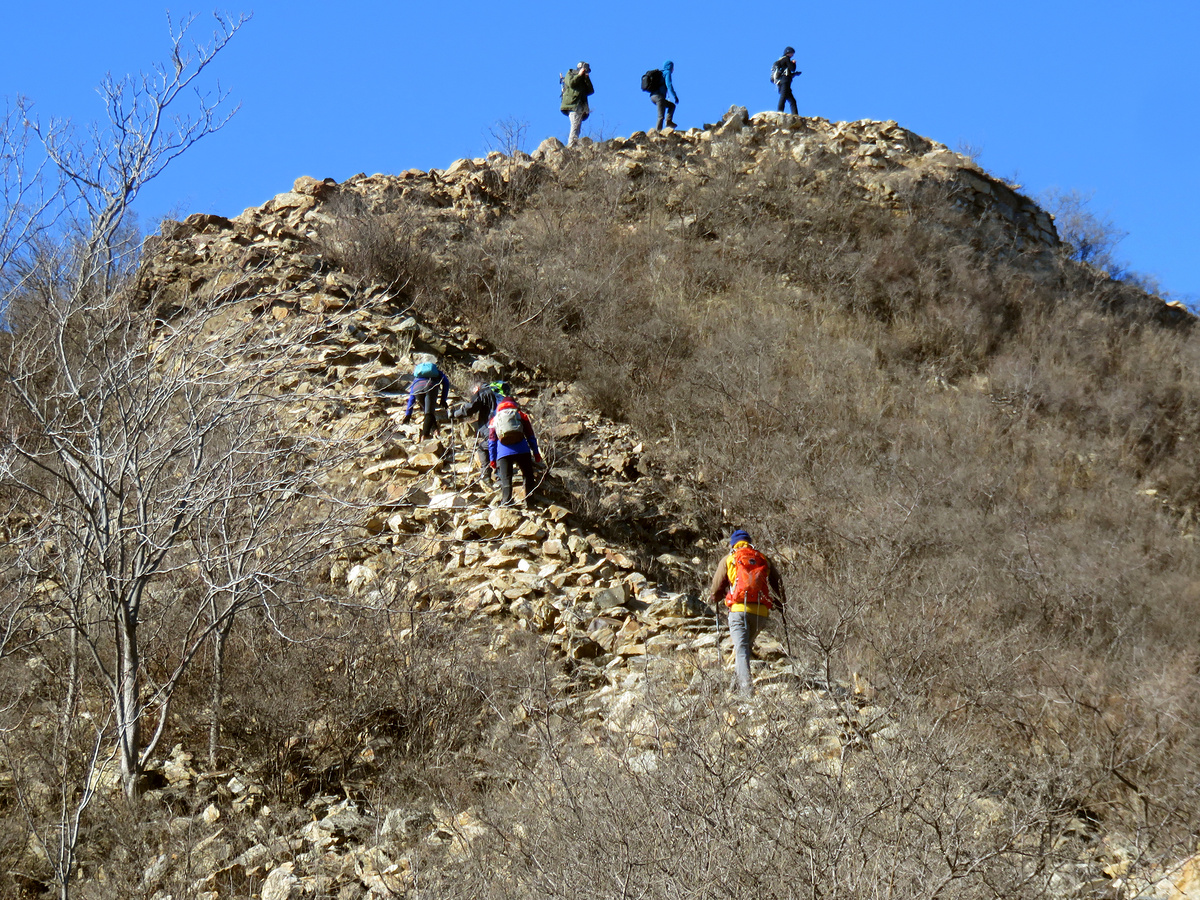
The Great Wall splits at the collapsed tower. The rocky and stony wall you see in the next photos is the part that’s supposed to date back to the Northern Qi Dynasty. (These next few photos are also in reverse order to the direction we were hiking i.e. the first one is nearest the collapsed tower, the last one is nearest the village.)
Bei Qi Great Wall at Gubeikou
Rocky Great Wall, said to date back to the Northern Qi Dynasty. (January 2017)
Bei Qi Great Wall at Gubeikou
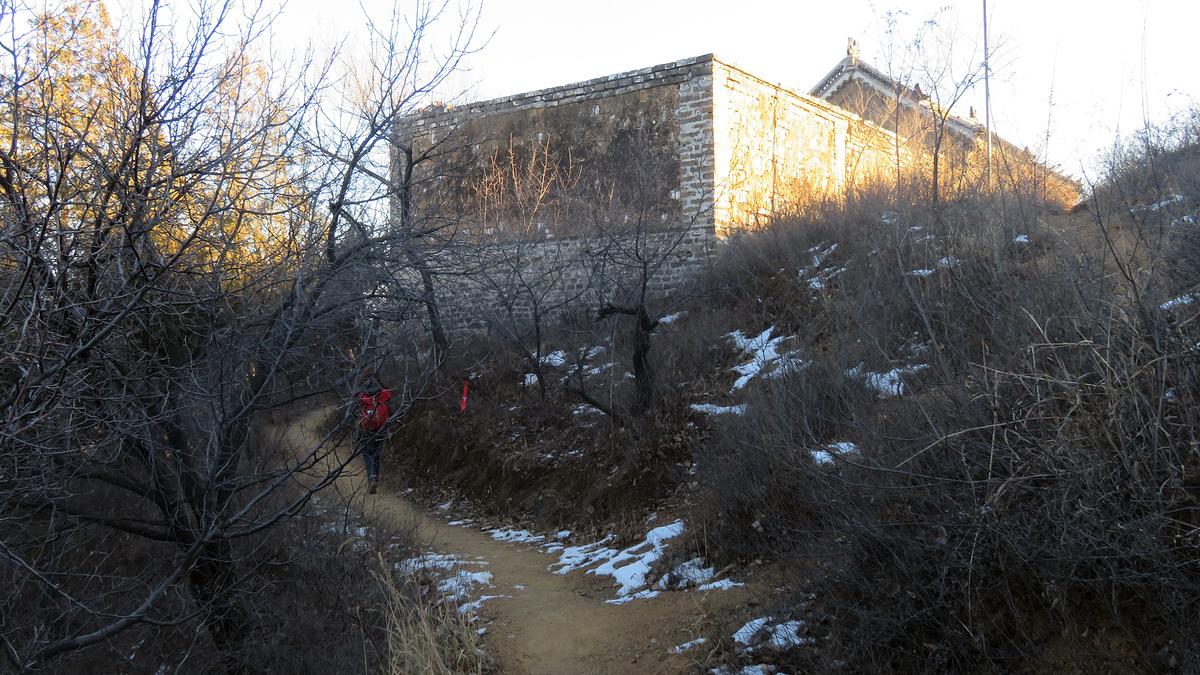
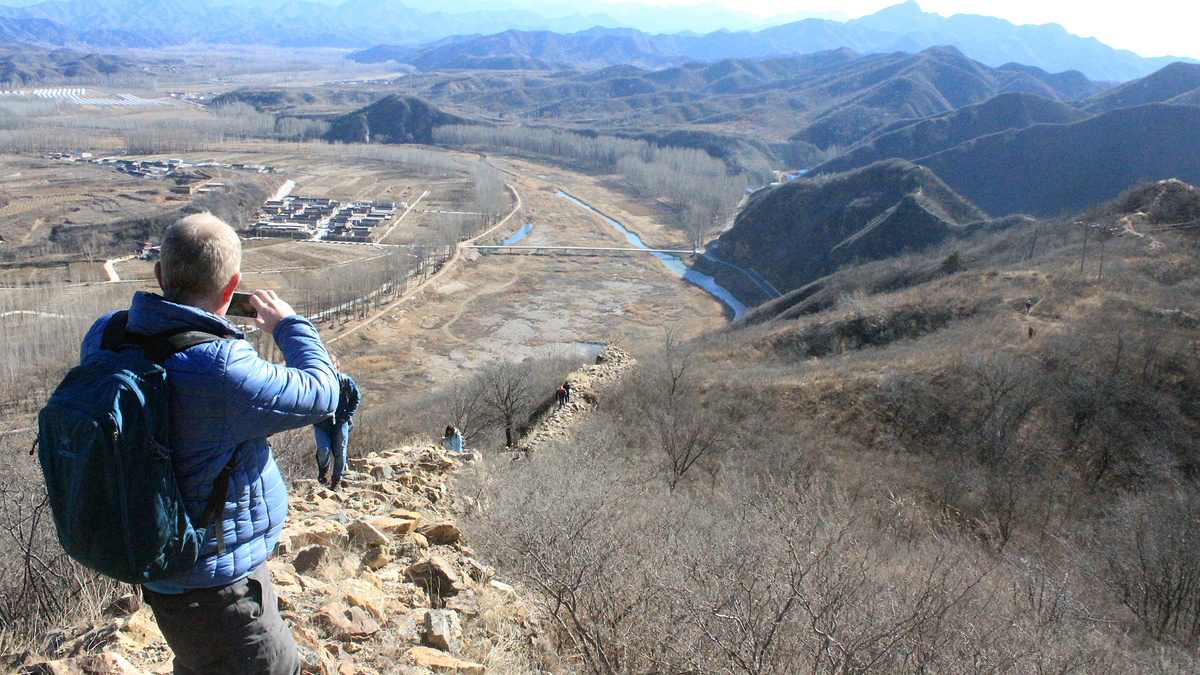
On the Great Wall above Chaoheguan Village, with the square outline of the old fort seen clearly.

In the preceding photo you can see a small collection of houses in a square shape. That’s Chaoheguan Village, and it used to be a fort. Parts of the walls remain, as well as the Gods of Plagues Temple.

Chaoheguan Village and other views

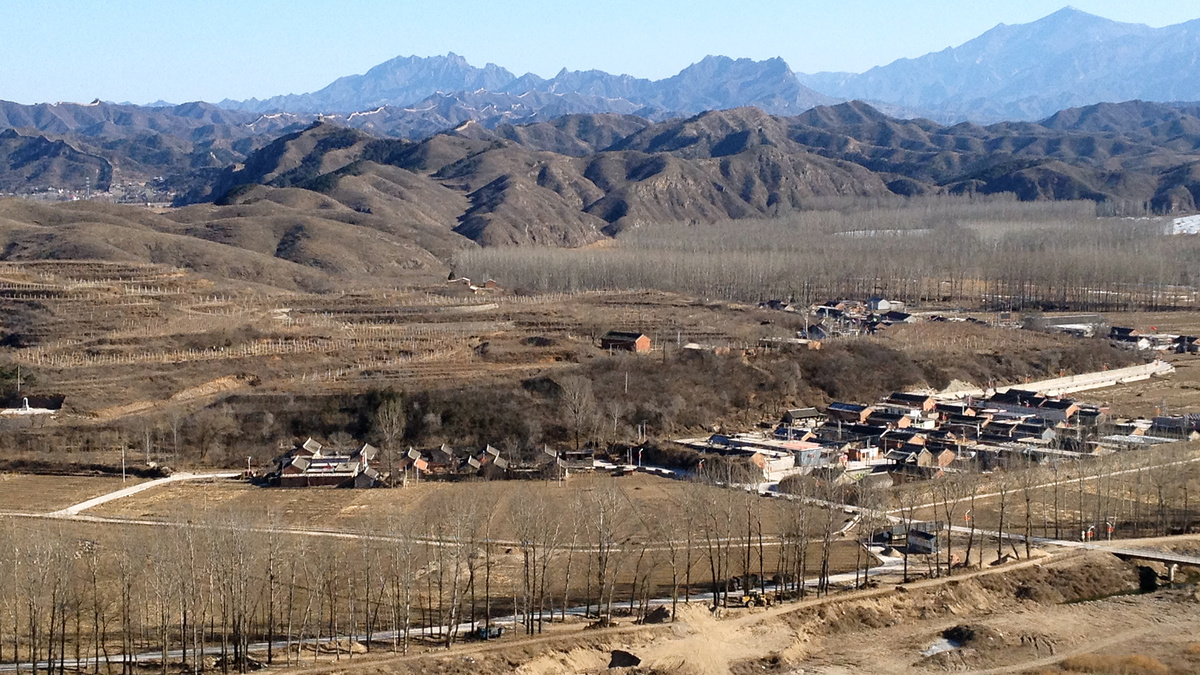
In Chaoheguan Village there’s a plaque with historical information about the old fort. The brief version is that it was built during the Hongwu period of the Ming Dynasty (1368–1398 AD), it’s a square shape with an area of approximately 155m2, and its old North Gate no longer exists. (Walked through here a few times, haven’t seen a South Gate either.)
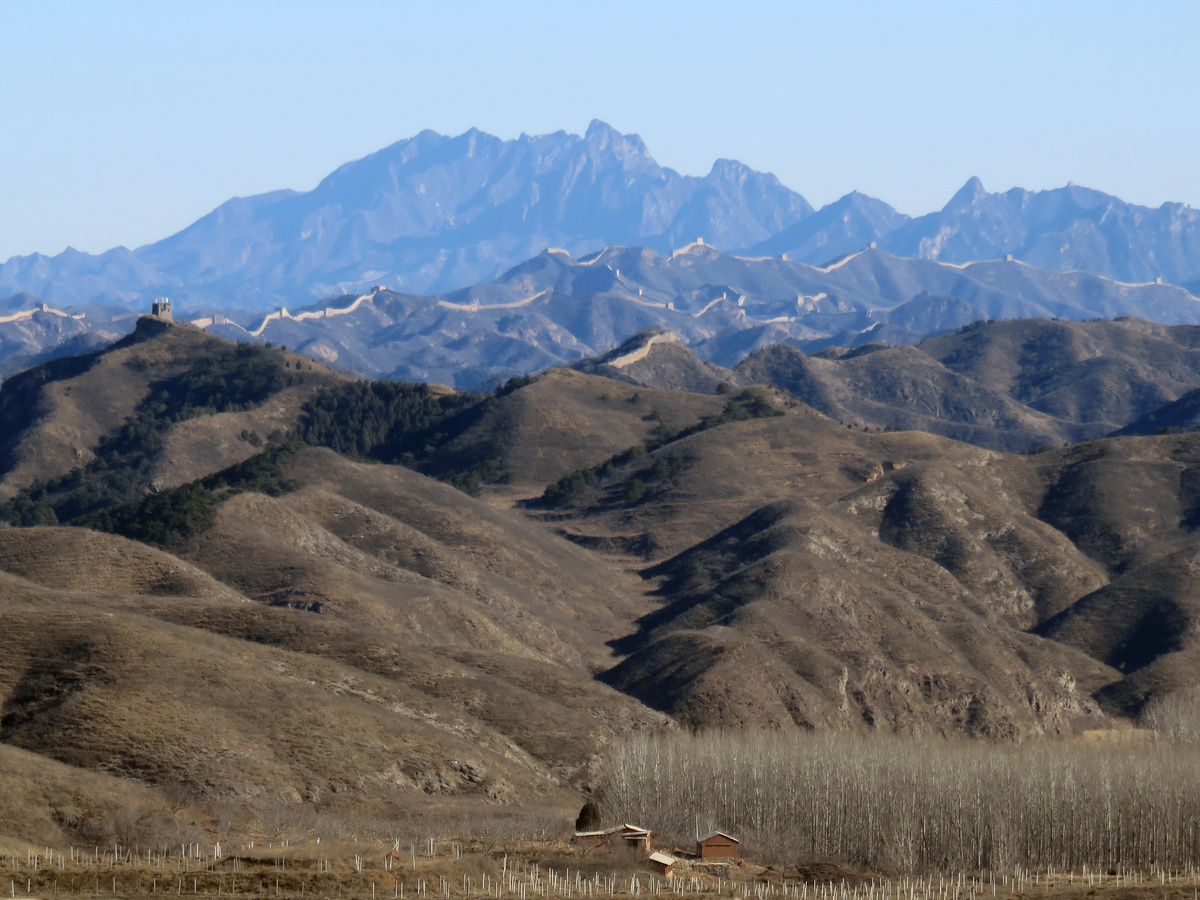
Chaoheguan Village, Gubeikou
View of Chaoheguan Village and surrounding fields, with the Gubeikou and Jinshanling Great Wall seen in the hills in the far distance. (January 2017)
View of mountains and Great Wall
On a clear day you can see all the way to the Jinshanling Great Wall.
A stone and rock wall by fields
The west wall of the old Chaoheguan Fort. (March 2015)
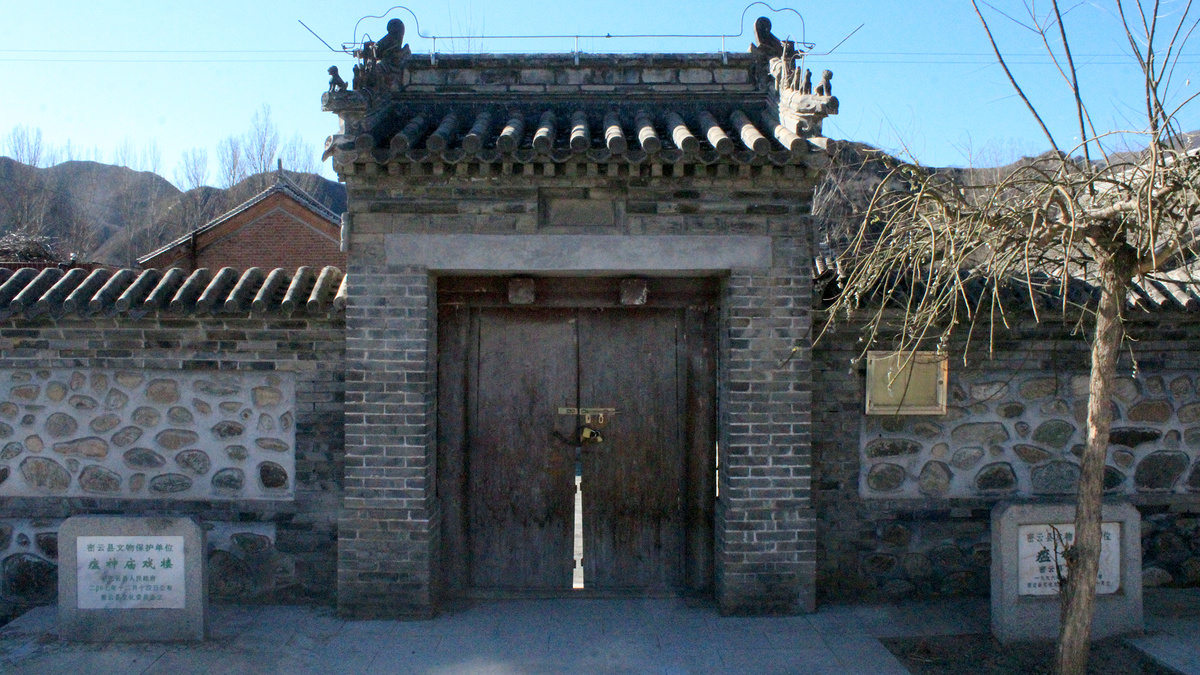
The gate of a temple
The gate of the Gods of Plagues temple in Chaoheguan Village. (2017)
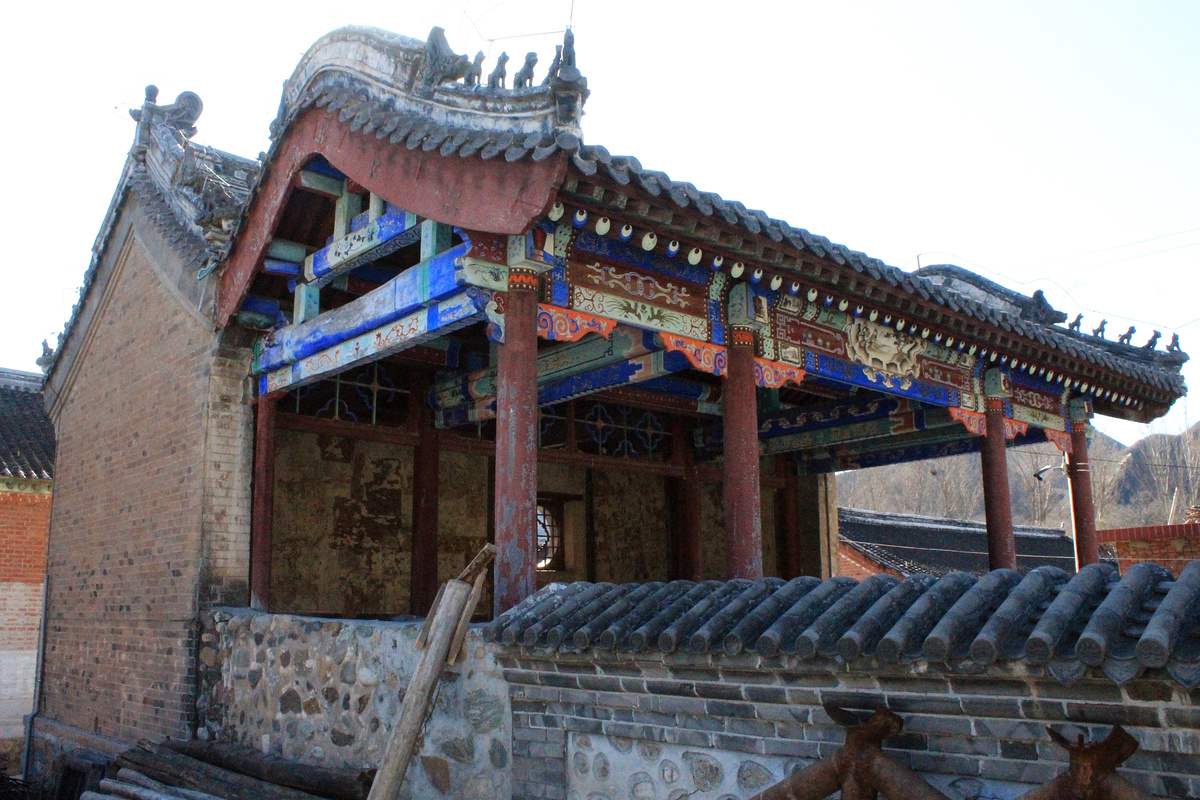
A decorated stage in a temple
The stage inside the Gods of Plagues temple in Chaoheguan Village.
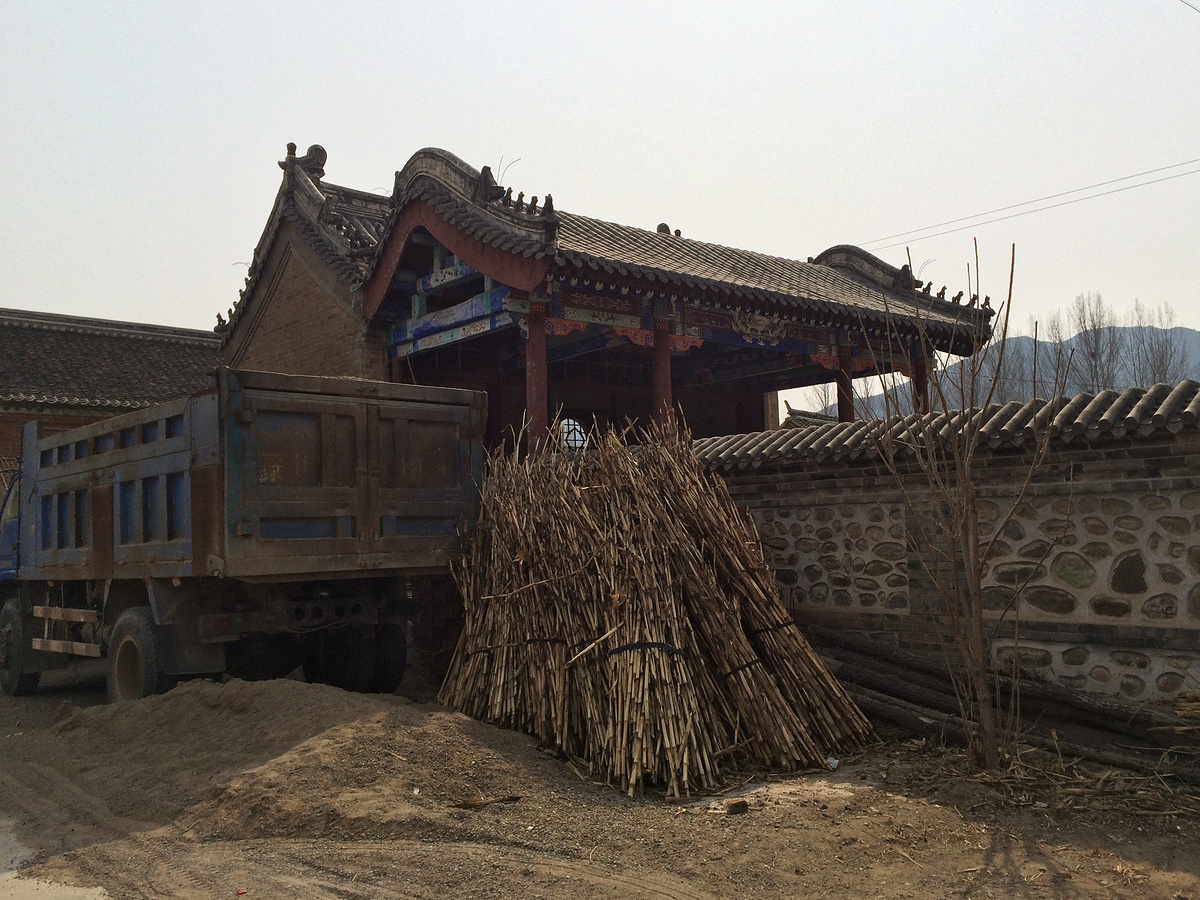
Straw stacked outside a temple
(2015)
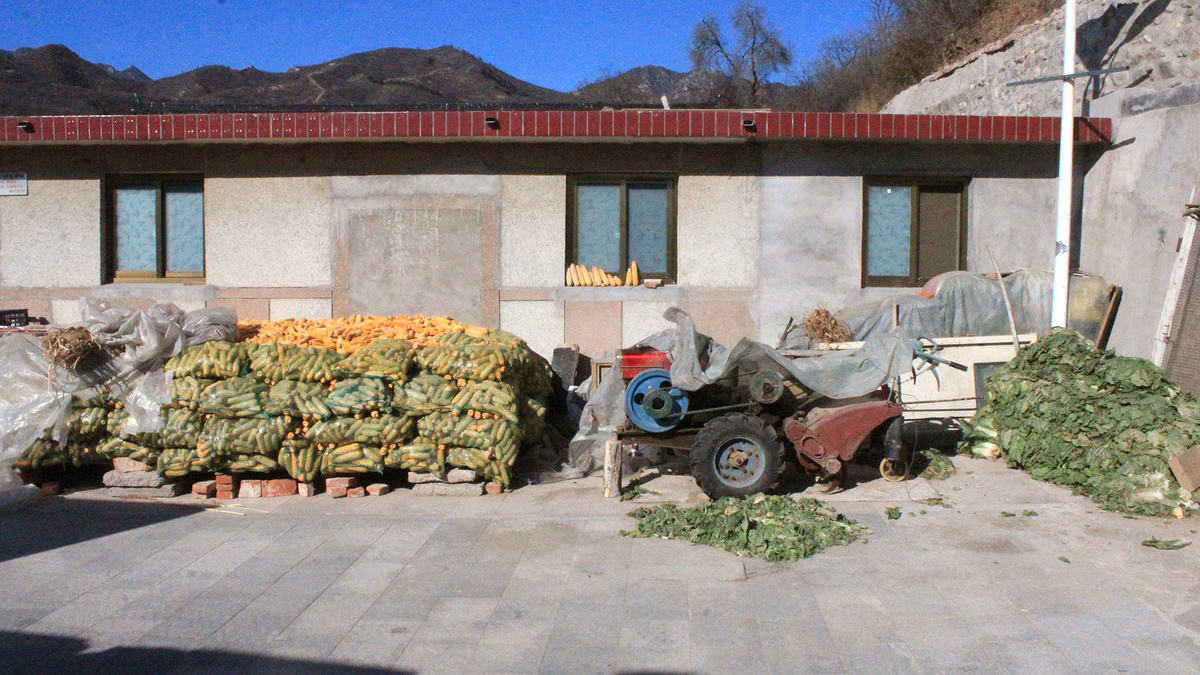
Cabbages and corn stacked in the courtyard of a village house.
Also in the village—cabbage and corn in a courtyard. Corn is usually grown for animal feed. (2017)
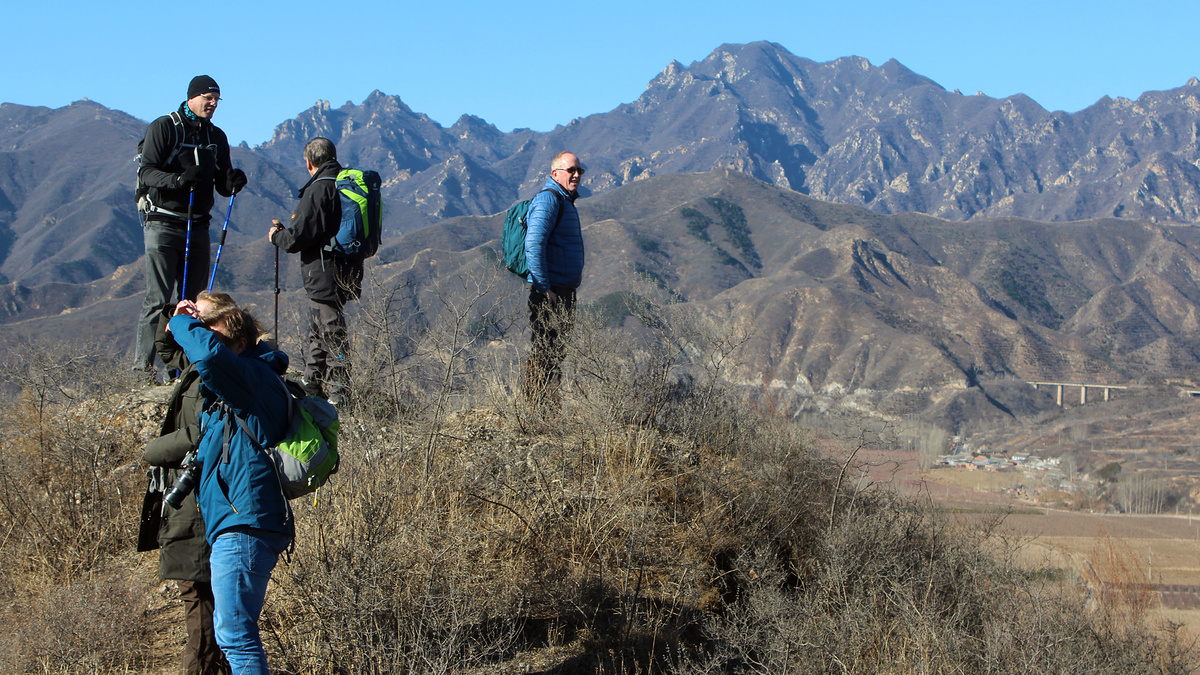
Hikers on hills.
On the hills opposite the Wohushan Great Wall. The rocky line of Northern Qi Great Wall can be seen descending from the peak in the middle distance, somewhat obstructed by my blue-clad hiking buddy Mr G. (Photo taken from a hill trail above the river, November 2017.)
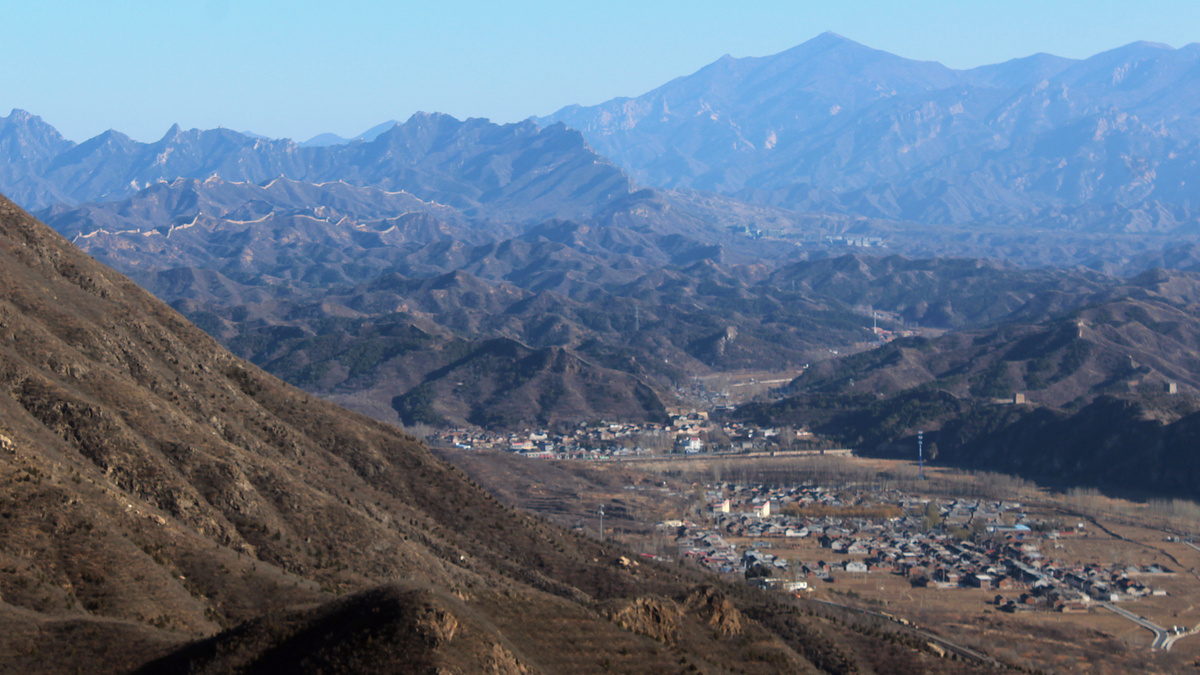
Broad view of the Gubeikou area
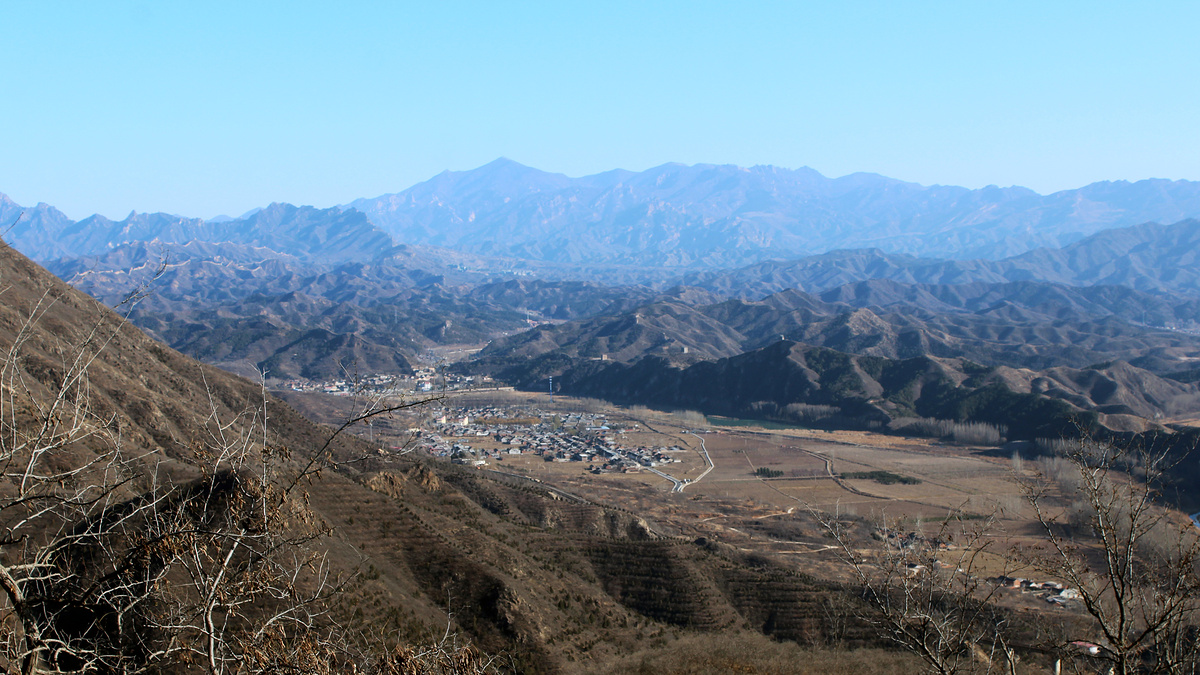
An overlook of the Gubeikou hills. Towers of Gubeikou’s middle loop of wall can be seen in the middle of the right half of the photo, with the Jinshanling Great Wall at the top of the left half. Beyond that is the Simatai ridge, with the peak of Wuling Mountain in the far distance. (November 2017)
Broad view of the Gubeikou hills.

Notes and links

Beijing Hikers used to have a hike called the Gubeikou West Circuit, but fire-wardens and fences made it too difficult to reliably get on the wall here, and rascally local guide Old Mr C didn’t help things either.

Gubeikou Great Wall information

Gubeikou Great Wall

Gǔběikǒu / 古北口 / Old North Pass
Wòhǔ Shān Chángchéng / 卧虎山长城 / Crouching Tiger Mountain Great Wall
Jiěmèi Lóu / 姐妹楼 / Sister Towers

Northern Qi Dynasty

I grabbed a map from Wikipedia that shows the borders of the Northern Qi Dynasty in 572 AD and added some annotations to show the rough location of Gubeikou (right on the northern border), Beijing (at the time called Yan), and Ye (the capital of the Northern Qi).

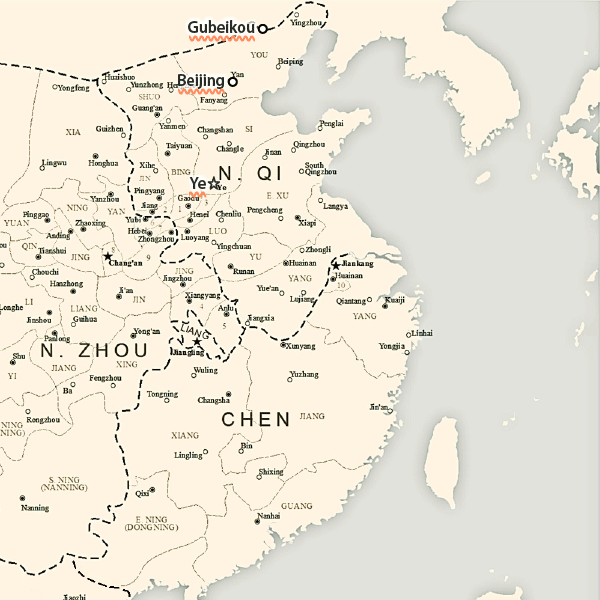
Prefectural divisions of the northern Qi, Northern Zhou, and Chen Dynasties as of 572 AD (Source Wikipedia "Northern Qi Dynasty") with extra annotations for Beijing, Gubeikou, and Ye.

Maps

Some more of the GPS maps I made for this area.
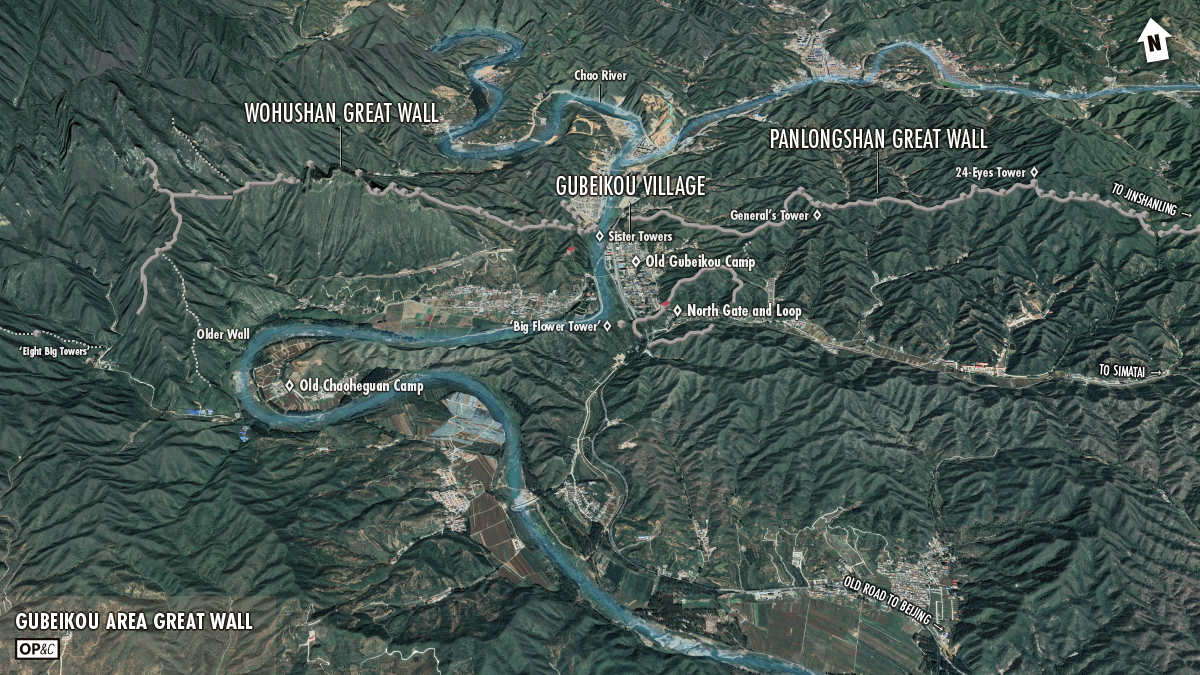
A map that shows an overall view of the the Gubeikou Great Wall in north-east Beijing.
The three sections of Great Wall at Gubeikou: Wohushan (to the west of the Chao River), Gubeikou camp and pass (in the middle), Panlongshan (to the east of the Chao River).
A map that shows the position of the Gubeikou Great Wall, Jinshanling Great Wall, and Simatai Great Wall in north-east Beijing.
The Gubeikou Great Wall is part of a line of Great Wall that blocks an area of lower hills between higher mountains in Beijing’s northeast.

To-do

  • In general: figure out how to dodge the fire-wardens and fences that prevent people from getting on to the wall here
  • Visit the Sister Towers
  • Visit the three-level Great Wall tower near the Sister Towers
  • Hike the Wohushan ‘big ridge’ all the way over past the round tower
  • Hike the spur section of the wall behind the big ridge and see if there’s any more wall on that side of the valley
  • Sneak into the Forest Park and hike up the Big Eight Towers.